About External Difference and Essential Analogy Between Savanna and Japanese Satoyama
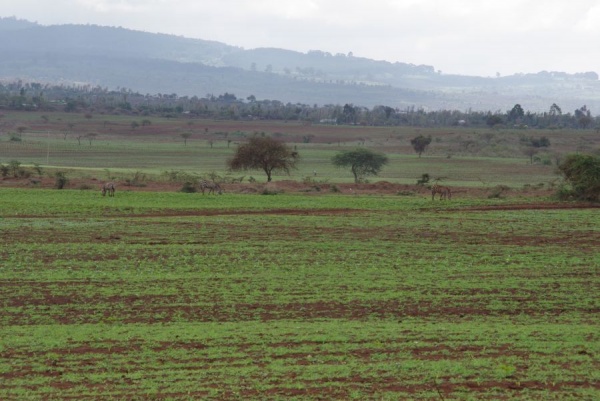
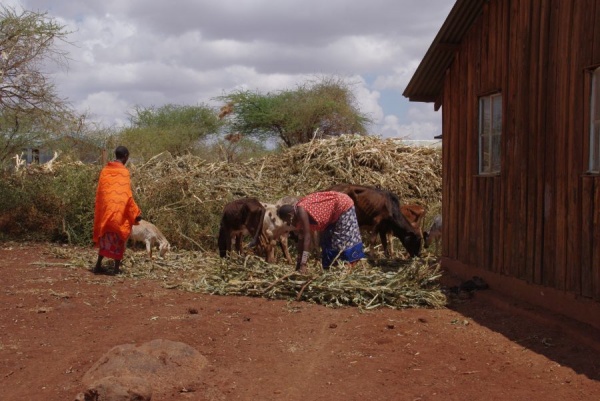
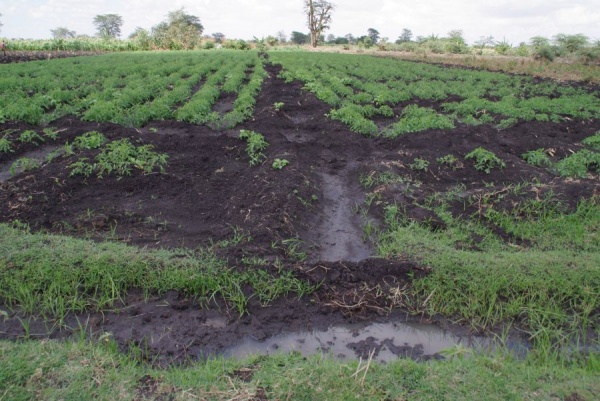
In savanna, one can see an unchanging, vast flat land stretched to the horizon. Cultivated fields also expand to wide area. However, if observed more closely, one can find water, houses, and corrals in the scenery so it is not the same as large scale intensive farms or unpopulated primary woodland. This type of landscape is externally different from those seen in Japan or Indochina where one sees a mosaic structure of about 1 hectare each of secondary forest, paddies, rivers and villages. People in Kenya have lived in this land by raising cows, collecting medicinal plants, fetching water, and raising a family despite the continuous threat of lion attack. In terms of quality of lifestyle, the savanna life has the same essence with that of present Indochina or Japanese satoyama sixty years ago. If a satoyama landscape is defined by its mosaic predisposition, the importance is laid more on whether necessary essence is present rather than the size of a patch.
About Traditional Knowledge and Modern Scientific Knowledge
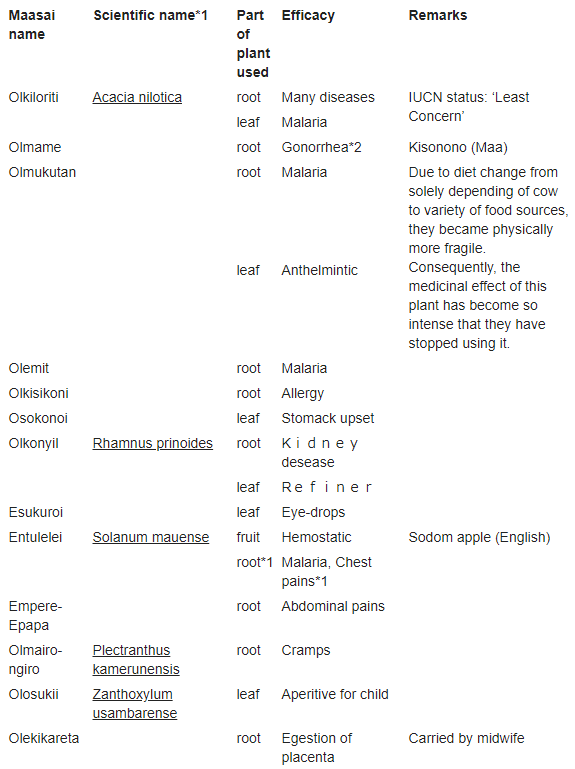
The Maasai depicted in this report present both traditional lifestyles of cattle breeding by utilizing savanna’s natural resources and modern irrigated agriculture to generate income. Traditionally, the Maasai depended on a diet based solely on cow blood, milk and meat, and collected natural resources from the savanna only for firewood and medicinal uses. They kept their rule to hunt no other wildlife than lions – their predators – by raising lion hunting warriors. It was a perfect mechanism in the savanna to coexist with wildlife and to enable the sustainable use of resources. However, the influence of a market economy, changes in wildlife management, and drastic environmental changes have caused this traditional lifestyle to become ill-suited for the present situation. The Maasai are seeking means to maintain their cows under never-experienced drought. Also, they are seeking farming techniques or knowledge to tackle the problems associated with their new agriculture business. Modern scientific knowledge should answer them. And a structure to introduce this knowledge to farmers is inevitable.
About Creation of New Commons
Proposals have been made for business model called “creation of new commons”, which incorporates local ecosystem such as flora, fauna, landscape or culture depending on them into business without disturbing the resources. For example in Namibia, a foreign non-governmental organization encouraged local villagers to conduct ecotours, in which tourists observe elephants living in the floodplain forest of seasonal streams. It has become a major income source for the villagers and they have since changed their lifestyle of living on dwindling cattle breeding to tourism (3).
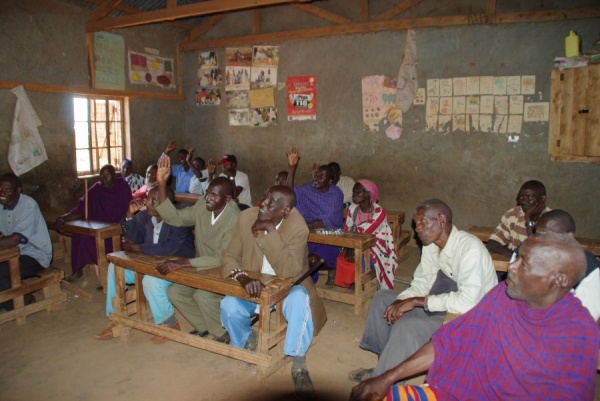
The Maasai have so far proceeded cautiously with agriculture. The elders always have the leading role and it ensures solid bonding of the community. Their traditional way of living by cattle breeding is almost unfeasible because of recent drought; nonetheless, they try to maintain the cattle while proceeding with agriculture which is a more practical cash income source. This state can be considered as dual economy (4). There is little chance of an external business model of selling ecosystem services to be admitted in this village for now. Neither the Maasai was willing to transform their traditional lifestyles. What they wish most importantly is the technology and knowledge to cope with the present drought condition. The young generation had hopes for educational opportunities from this income. When we talk about the creation of new commons, it does not have to be a business model incorporating the ecosystem service. It can be a human resource support system or information network to support the local traditional lifestyles.
The Maasai has kept their interdependence with wildlife in savanna without eliminating them. It makes the area enable to accommodate diverse wildlife although it is not a designated conservation area. This environment is sustained to this day by Maasai’s traditional lifestyle of coexisting with wildlife. It is likely that the current savanna environment of relatively high biodiversity will change when Maasai’s traditional living changes. In general, when a land is not used sustainably, its biodiversity tends to decrease. The Maasai people introduced in this report is now at the crossroad of changing their lifestyle. Their wish is to continue traditional cattle breeding, and yet it can no longer sustain their life in current condition. To support the Maasai’s wish to continue nature friendly life directly relates to saving the biodiversity in savanna from deterioration.
This study was commissioned by the Ministry of the Envieonment, Japan