

Community Landcare as Scalable Social Infrastructure for Managing Socio-Ecological Landscapes
18.08.2026
-
SUBMITTING ORGANIZATION
-
Landcare Tasmania
-
DATE OF SUBMISSION
-
19 May 2026
-
REGION
-
Oceania
-
COUNTRY
-
Australia
-
KEYWORDS
-
Landcare, community, resilience, social infrastructure, governance
-
AUTHORS
-
Peter Stronach (CEO – Landcare Tasmania)
Maria Duynisveld (PhD Student - University of Tasmania)
Summary Sheet
The summary sheet for this case study is available here.
Background
Socioeconomic, environmental characteristics of the area:
Lutruwita/Tasmania is a diverse socio-ecological landscape where agricultural production, conservation, and community life are deeply interconnected. Despite more than 50% of the state being under formal protection, Tasmania faces ongoing biodiversity decline, with numerous vegetation communities and species listed as threatened. At the same time, its working landscapes—farms, forests, waterways, and peri-urban environments—remain critical to both livelihoods and ecological function.
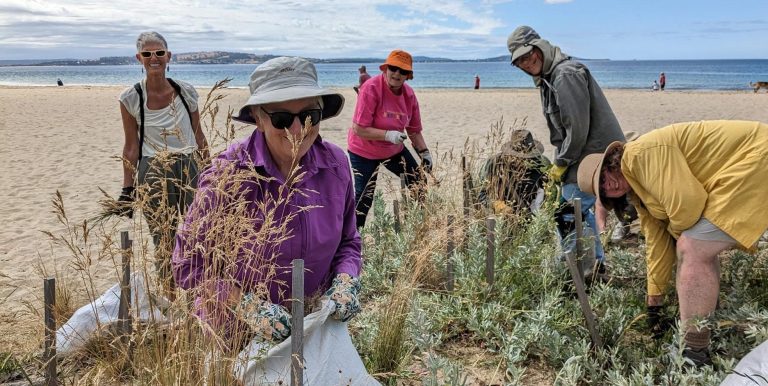
Across this landscape, communities have long played an active role in stewardship starting with the Tasmanian Aboriginal people (the Palawa/Pakana). Volunteer-based Landcare groups emerged to address local environmental challenges, often bridging social, cultural, and political divides through shared care for land and water. However, while these groups are effective at the local level, they are inherently vulnerable – reliant on volunteer capacity, exposed to fl uctuating funding environments, and often lacking the governance and administrative support required to sustain long-term action.
This creates a structural gap: while socio-ecological landscapes require coordinated, long-term management, the systems supporting community action are often fragmented and under-resourced.
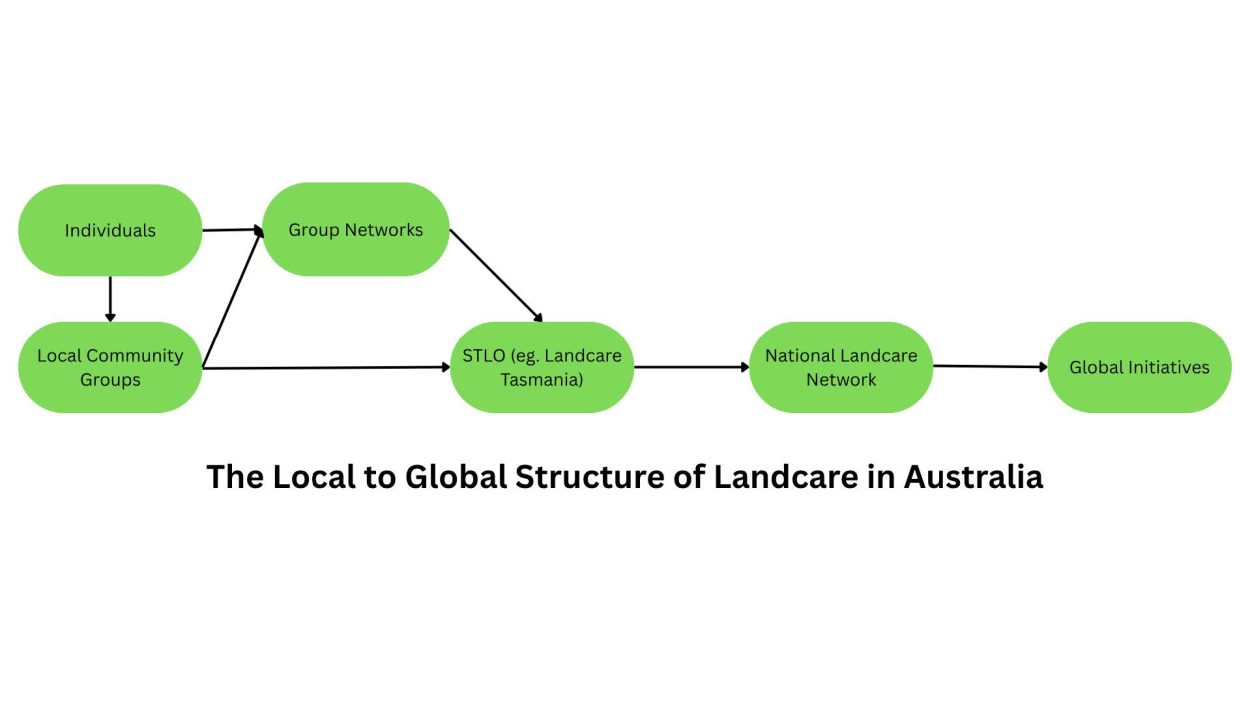
Landcare Tasmania was established in 1994 to address this gap. As a member-based, statewide organisation, it functions as social infrastructure: coordinating, supporting, and enabling community-led stewardship across more than 300 Landcare groups and thousands of volunteers. Rather than delivering projects directly, it provides the institutional framework that allows local communities to act collectively, consistently, and at scale.
Objective and Rationale
This case study examines how a member-based organisation can function as enabling infrastructure for community-led management of socio-ecological production landscapes and seascapes (SEPLS) (UNU-IAS and IGES, 2015).
The core objectives are to:
- Sustain community-led environmental stewardship across large and diverse landscapes
- Reduce structural vulnerability in volunteer-based systems
- Empower devolved, place-based decision making aligned with local ecological and social contexts
- Maintain continuity of action despite fluctuating funding environments
- Strengthen governance, participation, and knowledge exchange within community networks
Ecological outcomes at landscape scale cannot be achieved through isolated, short-term interventions alone. They require durable social systems that support coordination, empowerment, and continuity.
Detailed Description of Activities
The Landcare Tasmania Operating Model
Landcare Tasmania operates as an enabling system that integrates governance, funding, risk management, and community engagement to support environmental action across the state. Rather than functioning as a project delivery body, it provides the infrastructure that empowers local communities to lead and sustain landscape management. Functionally, it is run as a constitutional member-based organisation, a structure which prevents undue top-down decision-making.
This system is comprised of four interdependent components:
1. Risk and Governance Layer
Community participation in environmental management involves legal and fi nancial risk, particularly where volunteers work across all land tenures. Landcare Tasmania mitigates this risk through a bulk insurance scheme, supported by government funding, that provides public liability and personal accident coverage for Landcare activities.
This reduces administrative burden, which is linked to volunteer burnout where SEPLS management groups are not supported by social infrastructure. In parallel, governance support – including auspicing arrangements, compliance guidance, and organisational resources – strengthens the institutional capacity of groups to function effectively over time. This enables community groups to operate with confidence, focusing on their unique local knowledge of SEPLS management, rather than wrestling with paperwork.
2. Financial and Delivery Layer (Devolved Grants)
Landcare Tasmania administers devolved grant programs that distribute funding directly to community groups and land managers. This model enables local actors to design and implement projects that respond to specific ecological and social contexts, including weed management, habitat restoration, and sustainable land management.
By positioning a trusted intermediary between funders and communities, the model improves the efficiency and equity of funding distribution while maintaining institutional accountability. It also reduces transaction costs for both governments and volunteers, enabling resources to be directed toward on-ground outcomes.
3. Ecological Implementation Layer (Community Nurseries and On-Ground Action)
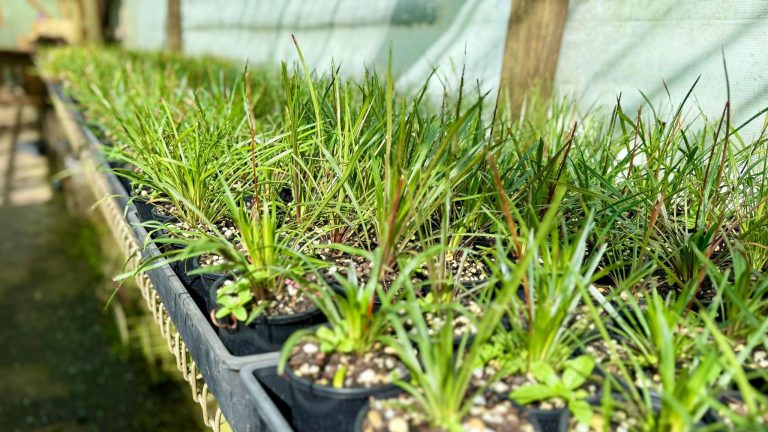
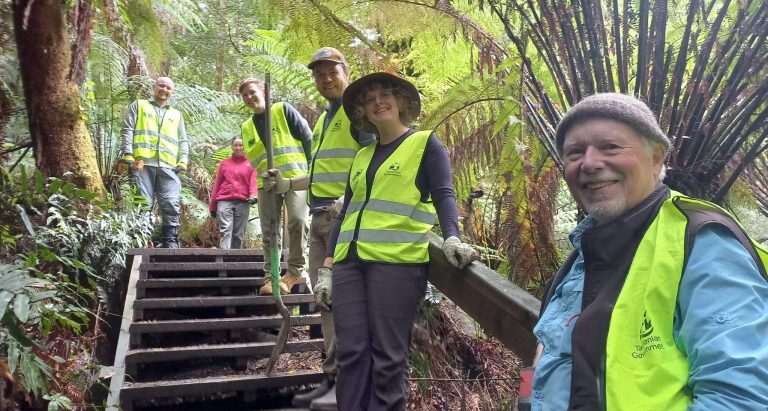
On-ground activities are led by community groups across agricultural, peri-urban, and natural landscapes. These include revegetation, invasive species management, habitat restoration, and monitoring.
Landcare Tasmania supports these efforts through initiatives such as community-based native plant nurseries (e.g. the Huon Valley Landcare Nursery), which provide locally adapted species for restoration while preserving regional genetic diversity. These nurseries also function as knowledge hubs, providing space for peer-to-peer learning and discussion. Place-based initiatives like native plant nurseries are valuable physical social settings to strengthen community relationships and awareness.
4. Access, Engagement, and Knowledge Layer
The Landcare network includes participants with diverse skills, capacities, and levels of digital literacy. To ensure inclusive participation, Landcare Tasmania maintains multiple access pathways, combining digital platforms with direct human support.
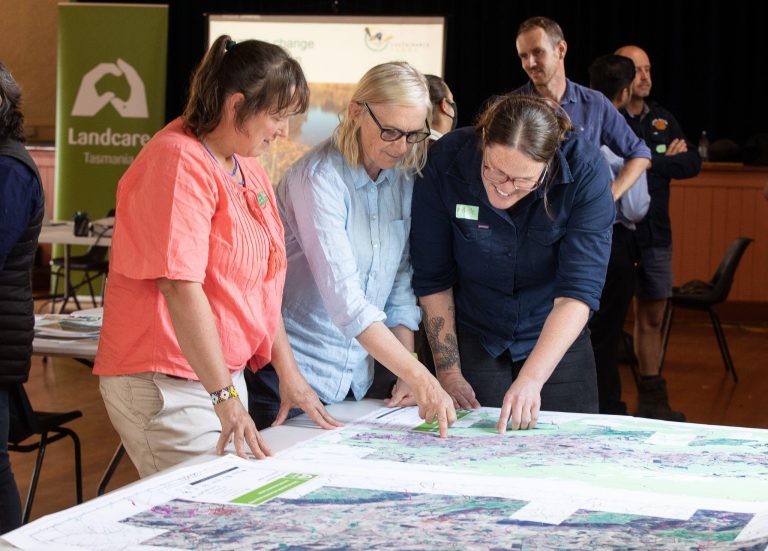
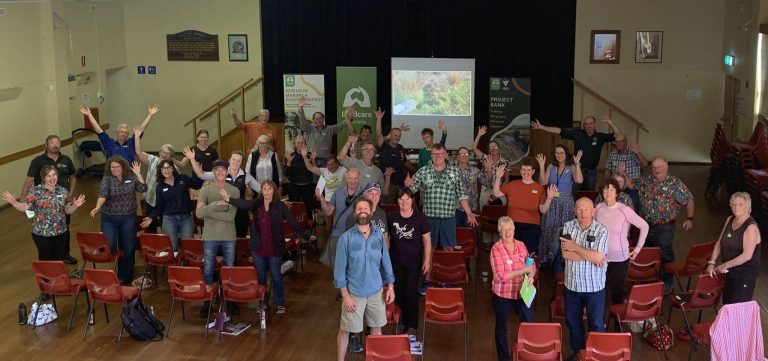
This includes governance resources, grant support, training, and knowledge exchange events to capture and share local knowledge. Knowledge exchange can take many forms, and a combination of place-based engagement and digital tools ensures every participant is able to meaningfully engage with the Landcare network and wealth of knowledge.
Ensure the longevity of community Landcare across Tasmania
Sustaining long-term community stewardship requires strong organisational foundations and ongoing engagement. Landcare Tasmania supports more than 300 community groups and thousands of volunteers across the state by providing governance resources, administrative support, training opportunities, and access to funding and equipment. Additional services—such as auspicing arrangements for non-incorporated groups, communication tools, and leadership opportunities—help groups remain viable even as volunteers change over time.
Alignment with the Satoyama Initiative
The Landcare Tasmania model operationalises the International Partnership for the Satoyama Initiative’s core principles (IPSI, 2023) through an integrated system of community-led governance and coordinated action across socio-ecological production landscapes and seascapes (SEPLS). The integration of these core principles into the strategic direction and everyday practice of Landcare Tasmania strengthens the resilience of Tasmanian community groups (UNU-IAS et al., 2024).
Strengthening local governance and participation
Strengthening local governance and participation is a central feature of the Landcare Tasmania model, which operates through a member-based structure that enables community groups to act as local governance bodies within their landscapes.
Landcare groups are not delivery mechanisms for externally designed projects. They function as place-based institutions that identify priorities, make decisions, and coordinate action at the local level. These groups bring together landholders, community members, Traditional Owners, and other stakeholders to manage shared socio-ecological systems.
Landcare Tasmania reinforces this governance layer by providing the institutional support required for groups to operate effectively, including insurance, compliance frameworks, governance resources, and coordination. This reduces administrative and legal barriers while maintaining community autonomy in decision-making.
Integrated landscape management
Integrated landscape management is achieved through coordinated, place-based activities led by community Landcare groups operating across agricultural, peri-urban, and conservation environments.
Through devolved grant programs and network coordination, local groups implement on-ground actions such as revegetation, invasive species management, riparian restoration, and sustainable land management practices. These activities are distributed across catchments and regions, collectively contributing to landscape-scale ecological outcomes.
Landcare Tasmania enables this integration by linking local priorities with broader regional and state-level strategies, ensuring that individual projects contribute to cumulative environmental impact.
Use of local knowledge and practice
The Landcare Tasmania model combines community experience with scientifi c and technical outputs. Local knowledge is central to the success of this model.
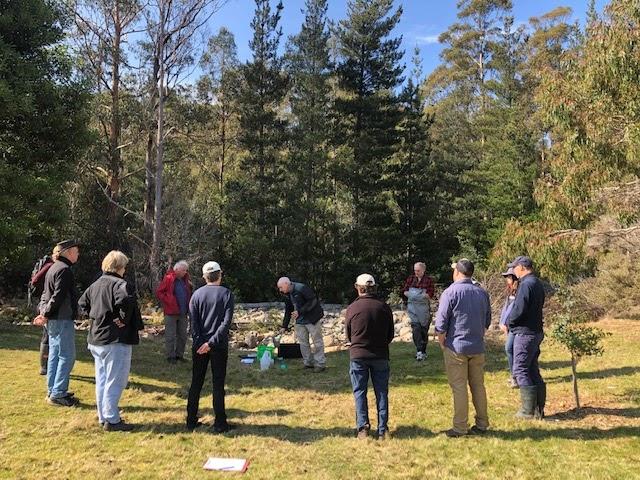
Community groups apply detailed, place-based understanding of local ecosystems to inform activities such as species selection, restoration methods, and land management practices. This knowledge is reinforced through peer learning, training programs, and initiatives such as community nurseries, which preserve local genetic diversity and ecological knowledge.
Landcare Tasmania further supports this through networking events that capture, share, and build upon local experience, ensuring that knowledge is retained and adapted over time.
Multi-stakeholder participation
Multi-stakeholder participation is embedded through a member-based governance model that supports inclusive and locally driven decision-making.
Landcare groups bring together landholders, community members, Traditional Owners, local government, and industry participants, often bridging diverse values and interests within shared landscapes. Landcare Tasmania strengthens this participation by providing governance support, insurance coverage, and coordination, enabling these groups to function as stable, community-led institutions.
This structure allows environmental stewardship to be shaped by those directly connected to the landscape, rather than imposed through external or centralised mechanisms.
Resilience and sustainability of socio-ecological systems
Resilience and sustainability are strengthened through the provision of long-term institutional support that enables continuity of community action.
Volunteer-based environmental management systems are inherently vulnerable to funding fluctuations, leadership turnover, and administrative burden. Landcare Tasmania addresses these challenges by providing governance resources, devolved funding, risk management systems, and network coordination.
This reduces dependency on individual actors and short-term projects, allowing community groups to steward the land over time. As a result, environmental outcomes are more likely to be sustained, and community capacity is strengthened across generations.
Results and Lessons Learned
The Landcare Tasmania model demonstrates that investment in social infrastructure signifi cantly increases the effectiveness, continuity, and scale of community-led environmental management.
A key outcome of this model is the ability to maintain continuity of stewardship across generations. Unlike individual-led efforts, community groups supported by institutional frameworks are more resilient to volunteer turnover, funding variability, and changing local conditions. This holds decision-making power within communities, which grounds outcomes with local priorities. It also allows projects to persist, evolve, and expand, contributing to cumulative landscape-scale impact.
The devolved funding approach has also demonstrated improved efficiency and effectiveness in resource allocation. By enabling locally informed decision-making, funding is directed toward areas of highest ecological need, while reducing administrative burden on both communities and funding bodies. This increases participation and ensures that resources translate more directly into on-ground outcomes (Stronach, 2017).
However, the model faces ongoing structural challenges.
A primary constraint is the difficulty of securing stable, long-term funding for social infrastructure. Existing funding frameworks often prioritise short-term, site-specific outputs over the institutional capacity required to sustain community networks. This creates a misalignment between how environmental outcomes are funded and how they are actually delivered.
Additional challenges include:
- the continued mischaracterisation of community groups as delivery agents rather than local governance actors
- increasing administrative and reporting requirements that can reduce accessibility for volunteers
- the need to support leadership renewal and succession within community institutions
- rising expectations placed on volunteer-based systems without corresponding investment in support structures
A critical lesson from this case is that underinvestment in social infrastructure constrains ecological outcomes. Even where technical knowledge, community motivation, and funding for on-ground works are present, the absence of coordinated support systems limits the scale, efficiency, and longevity of impact. Conversely, where community governance is
supported through appropriate institutional frameworks, local action becomes more resilient, coordinated, and capable of delivering sustained landscape-level change.
Key messages
- Community-led environmental action depends on sustained investment in the social infrastructure that enables participation, coordination, and continuity. Funding for on-ground works is not enough.
- Member-based organisations such as Landcare Tasmania function as governance and delivery systems, enabling local communities to manage socio-ecological production landscapes and seascapes (SEPLS) at scale.
- Devolved funding models increase the effectiveness and efficiency of environmental investment by aligning resources with local knowledge and priorities, while reducing administrative burden.
- Community groups are place-based governance bodies that support long-term stewardship, knowledge retention, and collective action, not delivery agents. Without institutional support, volunteer-based systems are vulnerable to burnout, fragmentation, and loss of impact; with it, they become resilient, adaptive, and capable of sustained landscape-scale outcomes.
- The Landcare Tasmania model demonstrates a scalable and transferable approach to implementing the principles of the International Partnership for the Satoyama Initiative through integrated governance, participation, and ecological management.
References and Bibliography
Stronach, P. (2017). The devolved grant model: Achieving lasting conservation outcomes across Tasmania. Australasian Plant Conservation: Journal of the Australian Network for Plant Conservation, 25(4), 14–16. https://doi.org/10.5962/p.373696.
UNU-IAS and IGES (eds.) 2015. Enhancing knowledge for better management of socio-ecological production landscapes and seascapes (SEPLS) (Satoyama Initiative Thematic Review vol.1), United Nations University Institute for the Advanced Study of Sustainability, Tokyo.
UNU-IAS, Alliance of Bioversity International and CIAT, UNDP GEF-SGP and IGES (2024). Indicators of Resilience in Socio-ecological Production Landscapes and Seascapes (SEPLS): 2024 Edition.
International Partnership for the Satoyama Initiative (IPSI) (2023). Strategy and Plan of Action 2023–2030.
Recommendations for further reading:
Ottesen, H. (2019). The Value of Community Landcare: A literature review (pp. 1–70). National Landcare Network.
Simpson, G., & Clifton, J. (2010). Funding and Facilitation: Implications of changing government policy for the future of voluntary Landcare groups in Western Australia. Australian Geographer, 41(3), 403–423. (WOS:000281030400007). https://doi.org/10.1080/00049182.2010.498043.
Landcare Tasmania. (2025). Annual Report 2024–25. Landcare Tasmania. https://assets.nationbuilder.com/landcaretas/pages/16563/attachments/original/1764117248/LandcareTas_Annual_Report_2025_Web.pdf?1764117248
Authors Profiles
Peter Stronach, CEO of Landcare Tasmania
Peter Stronach is CEO of Landcare Tasmania, the state’s peak body supporting more than 300 community Landcare groups. With over two decades of experience in community-led environmental management, he specialises in building scalable models for biodiversity conservation, sustainable agriculture, and landscape restoration through member-based governance and devolved delivery systems.
Maria Duynisveld, PhD student at the University of Tasmania
Maria Duynisveld is a PhD candidate at the University of Tasmania, focusing on community-led environmental management and the Landcare Tasmania model. With a background in agriculture, she is interested in the role of community institutions in supporting resilient socio-ecological landscapes.