

Jussara Palm Agroforestry Cultivation Promotion Project to Support the Regeneration of Forests on Brazil's Atlantic Coast
17.08.2026
-
SUBMITTING ORGANIZATION
-
NPO VERTSA
-
DATE OF SUBMISSION
-
30 April 2026
-
REGION
-
Americas
-
COUNTRY
-
Brazil
-
KEYWORDS
-
Agroforestry, Atlantic Coast Forest, CO2
-
AUTHORS
-
Dr. Yoshikazu Onose (Executive Director, NPO VERSTA)
Summary Sheet
The summary sheet for this case study is available here.
Background of Support Activities
This NPO was established to support agroforestry (AF) activities in the Brazilian Atlantic Coast Forest (Mata Atlântica) and to promote the regeneration and conservation of primary forests that serve as CO₂ sinks, thereby aiming for sustainable global environmental conservation.
The author had the opportunity to meet Japanese-Brazilians in Japan, and in 2006, first visited Brazil and learned about the existence of Mata Atlântica.
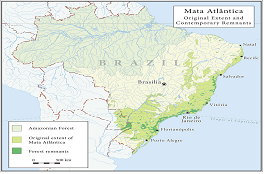
This Mata Atlântica stretches across 17 states along Brazil’s Atlantic coast and originally covered 130 million hectares, a quarter of the Amazon’s forest area. However, due to development, the current remaining area is only 9.9 million hectares, representing only 7% of the original forest area.
At the time of the author’s first visit to Brazil, global warming was a global concern, and the United Nations Climate Change Conference, aiming to reduce greenhouse gas emissions, had begun in 1995 at the United Nations Conference of Parties (COP).
Taking this visit to Brazil as an opportunity, the author established the NPO VERSTA in Japan in 2009 and began activities to support the revitalization of Mata Atlantica, involving Brazilians, Japanese-Brazilians, and Japanese people.
Socio-economic and Environmental Characteristics of the Target Area
The target area for this support project is the southwestern region of São Paulo State, specifically the Mata Atlántica. (See F. 1.)
The reason for selecting this region was a proposal from Mr. Genji Yamazoe, former Director of the Forestry Institute of the São Paulo State Environmental Department, who informed us that agroforestry (a mixed farming method combining
forestry and agriculture) was being implemented in Riopreto village, Setebaras city, São Paulo State.
Therefore, in an effort to prevent illegal logging in the area, the São Paulo state government applied for designation of Mata Atlántica as a UNESCO World Natural Heritage site and designated the Jussara palm as an endangered species. However, illegal logging continues unabated.
Accordingly, the São Paulo State government applied for UNESCO World Natural Heritage status for Mata Atlántica and designated the Jussala palm as an endangered species to prevent illegal logging in the region. However, illegal logging continues unabated.
Therefore, our NPO decided to support the introduction of AF (Agricultural Farming) with Jussara palms as the main tree in the region, as a farming method that would allow farmers to maintain their income without relying on the illegal logging of Jussara palms.
At the time, guidance on the introduction of Jussara palm AF in the region was being provided by Professor Fernando Silveira Franco of the Faculty of Environmental Sciences at the Federal University of São Carlos, a leading figure in bioecology research in Brazil. Therefore, our NPO partnered with Professor Franco to develop support for the introduction of Jussara palm AF in the region as an SDG (Sustainable Development Goals) activity.
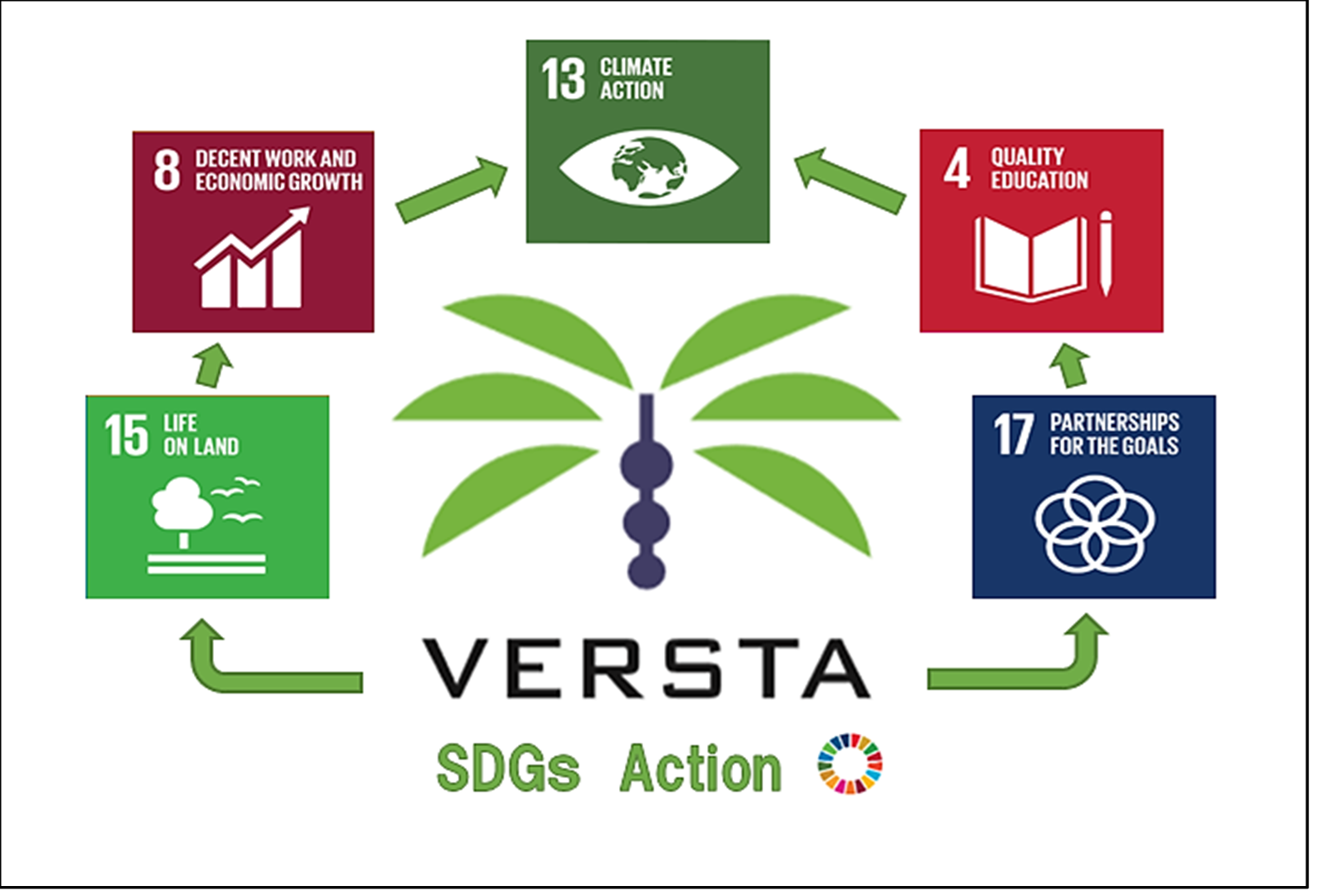
Our NPO’s SDGs action model is a pentagonal model that incorporates SDGs 17 + SDGs, promotes SDGs 4 + SDGs 8, and aims to achieve SDG 13. (See F. 2.)
-
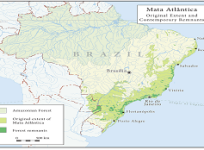
- F1. Areas supported by our NPO(2011)
-
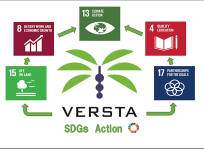
- F2. Our NPO’s SDGs action model(2011)
Purpose and Rationale
1. Objectives of AF Support Activities
Our NPO’s mission statement is: “With the motto ‘Stop Global Warming!’, we aim to contribute to preventing global warming by supporting sustainable forest regeneration and conservation through AF (Agricultural Fiber) cultivation.”
Furthermore, our mission statement is: “This organization supports the dissemination of AF for the Jussara palm, an endangered species designated by the Brazilian Ministry of the Environment, in the Atlantic coastal forest, a UNESCO World Natural Heritage site. By promoting the regeneration and conservation of forests, which are CO2 sinks, we aim for sustainable global environmental conservation.”
2. Basis for the Amount of CO² Cycle on Earth
1. Amount of CO² Cycle on Earth’s Land
According to the Economist Online, published by Japan’s Mainichi Shimbun on May 31, 2021, the CO² cycle by land forests on Earth is estimated to be a) + b) – c) = 8.9 billion tons – 2.6 billion tons = 6.3 billion tons per year d), based on a) CO² emissions from changes in human land use, b) CO² emissions from human use of fossil fuels, and c) CO² absorption by land forests.
2. Amount of CO² Cycle in the Earth’s Oceans
According to the same Economist, the CO² cycle by the Earth’s oceans is estimated to be e) – f) = 17.7 billion tons – 20 billion tons = -2.3 billion tons per year g), based on e) CO² emissions from the oceans, and f) CO² absorption by the oceans.
3. Amount of CO² remaining in the Earth’s atmosphere
The amount of CO² remaining in the Earth’s atmosphere is d) + g) = 6.3 billion tons – 2.3 billion tons = 4 billion tons per year, and this is the cause of the extreme weather events on Earth today.
Therefore, in order to reduce the amount of CO² remaining in the Earth’s atmosphere, it is considered necessary to reduce CO² emissions from human use of fossil fuels, as well as to take measures to absorb and store the remaining CO² in the atmosphere through the photosynthesis of forests.
3. Effectiveness of CO² Absorption and Storage by Jussara Palm AF
According to the paper “CARBON STOCK GROWTH IN A SECONDARY ATLANTIC FOREST” by Paulo Henrique Villanova (Professor, Federal University of Visousa) et al., the carbon storage in Mata Atlantica, São Paulo state, is reported to be approximately 130 tons of CO²/ha in CO² equivalent, and the annual carbon absorption is approximately 7.2 tons of CO²/ha in CO² equivalent. Our NPO’s Jussara Palm AF support project is expected to improve carbon absorption through the regeneration of Mata Atlantica.
Jussara palms take 7-8 years from cultivation to fruiting, and are said to continue growing for 30 years after fruiting. During this time, the absorption and fixation of atmospheric CO² from the canopy where the leaves are concentrated continues, suggesting a high effectiveness in preventing global warming.
Detailed Description of Activities
The NPO’s Jussara palm AF support activities are described below with photographs for each activity period.
Phase 1: Pre-Activity Period (2009-2011)
During this activity period, in January 2010, a meeting was held with Associate Professor Fernando Silveira Franco of the Federal University of San Carlos regarding future Jussara palm AF support activities. Following the meeting, an advanced AF field survey was conducted in Liberón Preto.
In February 2011, we conducted a site visit to Riopret village in Sete Barras, a candidate site for the VERSTA Jussara palm AF model field, and it was during this visit that we first confirmed the presence of the Jussara palm.(See F3.& F4.)
-
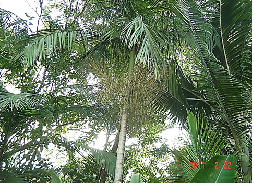
- F3.First encountered a Jusara palm in Riopret village, Setebas (2011)
-
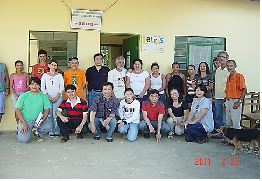
- F4. First meeting with prospective participating farmers at the Riopret village community center in Setebas (2011)
Phase 2: Public Grant Activity Period (FY2012-FY2019)
During this period, our support project was selected for the Japan Environmental Restoration and Conservation Agency’s “Global Environment Fund” Introductory Grant (1 year) in FY2012, followed by the same fund’s “General Grant” (3 years) in FY2014, and then the same fund’s “Expanding Grant” (3 years) in 2017.
With the introductory grant from the foundation, a shade net for seedling cultivation was erected in Riopret village in September 2012, and breeding of 4,000 Jussara palms and 3,000 of 21 native tree species began. Brazil expressed its gratitude for the publicly funded VERSTA Jussara Palm AF support activities with a poster. (See F5 & F6)
From 2014 to 2016, the fund’s “General Grant” was used for the purchase of seedlings and fertilizer for the Jussara palm AF model field, the holding of project meetings and technical exchange meetings, and follow-up guidance for Jussara palms. During this period, in 2016, the Jussara palm was introduced at the opening ceremony of the Rio Olympics held in Brazil, and Mr. Takahiro Nakamae, Consul General of Japan in São Paulo, visited the Jussara palm AF model field. (See F7 & F8)
In addition to its traditional grant activities, the fund’s “Expanding Grants” program, which ran for three years starting in 2017, launched the “AF Environmental Learning Sessions” (held twice: once at a model field and once at the school) at the Cordeiro de Faris General School, a combined primary and secondary school in Sete Barras, targeting students who appear to be accompanying their fathers in illegal logging of Jussara palms. (See F9 & F10)
By the end of fiscal year 2019, the number of participating farmers in the Jusara Palm AF Model Field had reached 15, with a total cultivated area of 13.49 hectares and a total of 13,132 palm trees.
-
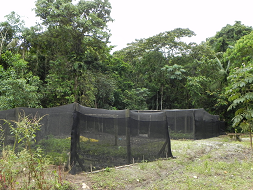
- F5. Shade netting installed in Riopret village as a result of VERSTA’s support activities (2012)
-
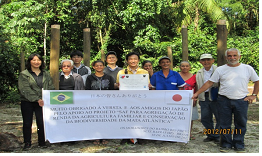
- F6. A poster of gratitude from Brazil for the VERSTA support activities (2012)
-

- F7. Introduction of Jussara palm saplings (red circle) at the Rio Olympics opening ceremony (2016)
-
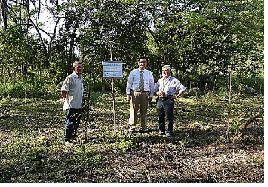
- F8 Consul General of Japan in São Paulo, Takahiro Nakamae, inspected the Jussala palm AF field (2016).
-
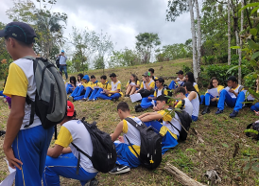
- F9. AF environmental learning session held at the Cordeiro de Faris General School (on the field)
-
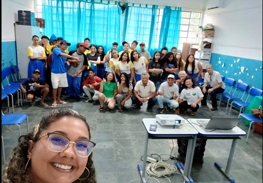
- F10. AF environmental education session held at the Cordeiro de Faris General School (on campus)
Third Stage: Private Sector Grant Activity Period (FY2020 onwards)
During this activity period, the project was selected for the “Mitsui & Co. Environmental Fund” (3 years) in FY2020, and has continued to receive the “AEON Environmental Activity Grant” (5 times) from FY2021 to FY2026.
In FY2020, due to the impact of the COVID-19 pandemic that occurred worldwide, it became impossible to participate in project meetings and technical exchange meetings in the supported areas of Brazil.
However, thanks to the consideration of these supporting organizations, the budget for participation in planned project meetings and technical exchange meetings was allowed to be redirected to the purchase of seedlings such as Jussara palm and fertilizers, resulting in a significant increase in the number of Jussara palm AD model fields during this period.
Furthermore, following the lifting of Japan’s COVID-19 state of emergency in the fall of 2021, we conducted an AF (Agricultural Farming) training program for university students to cultivate future leaders of our NPO in February 2022. (See F 11.)
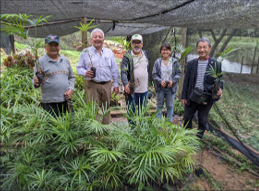
By the end of fiscal year 2025, the number of participating farmers in the AF model field for jusara palms reached 54, with a total cultivated area of 82.18 hectares and a total of 71,101 jusara palms cultivated. (See F 12.)
-
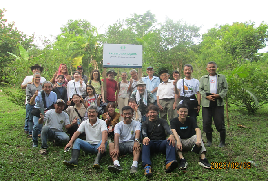
- F11. A group of AF (Agricultural Science) trainees visiting the Jose R. Cunha model field (2022)
-
- F12. Jusara palm seedlings grown in the Jose R. Cunha model field (2023)
Results and Lessons Learned
1) Progress of the Jussara Palm AF Support Project
Our NPO’s Jussara Palm AF support project has set numerical targets of 103 hectares of cultivated area and 100,000 cultivated trees to meet the SDG Goal of 2030. As of the end of fiscal year 2025, the achievement rate of these numerical targets is 79.8% for cultivated area and 71.1% for cultivated trees.
Based on the above, we can assess that our NPO’s Jussara Palm AF support project is progressing at a pace that is expected to achieve its numerical targets.
2) Lessons Learned from the Jussara Palm AF Support Activities
① Building a network of local partners is crucial for the success of overseas support projects.
Our NPO’s support project started with an encounter with a Japanese-Brazilian, and the subsequent successful networking with Brazilians has allowed the project to proceed smoothly. From this, we felt that building a network of local partners is especially important for overseas support projects.
② Creating a system that enables participating AF model field farmers to independently manage AF cultivation is crucial.
To make jussara palm AF cultivation sustainable, it is crucial to create a system for independent AF cultivation management that does not rely on support. Therefore, the challenge is to support local manufacturers in creating high-value-added products that utilize the high nutritional value of jussara palm fruit, thereby improving farmers’ income from jussara palm fruit.
Key Message
Our NPO is seeking successors for our Jussara Palm AF support project, and we look forward to your understanding and participation.
Web Links to Related Organizations and Projects
NPO VERSTA URL: https://www.versta.org/?lang=ja
GIYouTubeチャネルURL:https://www.youtube.com/onginiciativaverde
References
1) “Introduction to Business in Brazil, a Nation of Circular Resources,” by Yuichi Onose, published by Doyukan Co., Ltd., first edition, first printing, June 30, 2006, ISBN 4-496-04166-9
2) “Ecology and Conservation of the Atlantic Coast of Brazil (Mata Atlantica),” by Genji Yamazoe and Takaki Toyoda, from “Forests and Forestry Overseas No. 84 (2012),” published by the International Greenery Center, a public interest incorporated association.
3) “Conservation Status of Mata Atlantica, Brazil,” by Masato Kohiyama, edited by the Natural Environment Research Center.
4) “CARBON STOCK GROWTH IN A SECONDARY ATLANTIC” by Paulo Henrique Villanova (Professor, Federal University of Visousa), et al. FOREST” (https://www.researchgate.net/publication/337579214_CARBON_STOCK_GROWTH_IN_A_SECONDARY_ATLANTIC_FOREST)
Author Profile
[Place of Birth] Tsuruoka City, Yamagata Prefecture, Japan
[Current Address] Mitaka City, Tokyo, Japan
[Highest Education] Completed Doctoral Program in Management at Takachiho University Graduate School (Ph.D.)
[Professional occupations] Management consultant, IT coordinator, System auditor
[Contact Email] onoseyoshikazu827@gmail.com