

Mangar Bani Sacred Grove: A Socio-Ecological Refugia for Biodiversity and Climate Resilience in the Aravalli Hills, Delhi NCR
02.04.2026
-
SUBMITTING ORGANIZATION
-
The Celestial Earth
-
DATE OF SUBMISSION
-
December 2025
-
REGION
-
Asia
-
COUNTRY
-
India
-
KEYWORDS
-
Sacred Groves, Biodiversity Refugia, Climate Refugia, Aravalli hills, Community Conservation, Urban Ecology
-
AUTHORS
-
1. Tania Bhattacharya: Founder, CEO; The Celestial Earth, Gurugram
2. Ishita Rathore: Research Associate; The Celestial Earth, Gurugram 3. Sayanee Das: Senior Environmental Project Coordinator; The Celestial Earth Development Council, Gurugram -
LINKS
-
Mangar Bani- A Sacred Grove & and Palaeolithic site in Aravalli: YouTube
Summary Sheet
The summary sheet for this case study is available here.
Summary
Mangar Bani, one of the last surviving primary forest patches in the Delhi NCR, represents a rare sacred grove ecosystem of the north-Indian Aravallis. Protected for centuries through community faith in Gudariya Baba, it remains a vital biodiversity reservoir and a micro-climatic refuge amid rapid urbanisation. The grove shelters around 219 bird species, several mammals including leopards and hyenas, and a dense stand of Dhau (Anogeissus pendula) a slow-growing, drought-resistant tree dominant in Aravalli ecology.
This case study documents Mangar Bani’s ecological, cultural, and climatic significance, its traditional governance by the Gujjar community, and the threats posed by mining and real-estate expansion. It highlights its potential to function as a biodiversity and climate refugia, contributing to SDG 13 (Climate Action) and SDG 15 (Life on Land) through local stewardship and landscape-scale conservation.
1. Background
The sacred groves of India represent ancient systems of community-based conservation where ecological integrity and spiritual belief coexist. These groves, governed through customary taboos, often safeguard biodiversity more effectively than state-protected forests (Malhotra et al., 2001). Among the few surviving examples in north India, Mangar Bani Sacred Grove, located in the Faridabad district, Haryana, stands as a rare relic of the original Aravalli dry tropical forest ecosystem within the Delhi National Capital Region (NCR). Revered as the abode of Gudariya Baba, this forest has been traditionally protected for centuries by local Gujjar communities who consider it sacred. According to local belief, harming the forest invokes divine retribution, a cultural norm that has functioned as a de facto conservation law.
Amid rapid urban expansion, this sacred grove has become a biological refuge amidst severe ecological degradation. It remains a thriving habitat for multiple bird species, several mammals including leopards and hyenas, and a rare, contiguous stand of Anogeissus pendula (Dhau), a species known for drought resistance and slow regeneration (Verchot & Biswas, 2021; Gulshan, 2023). The grove thus represents a unique intersection of culture, climate resilience, and biodiversity conservation.
2. Ecological and Environmental Features
Mangar Bani is situated within the Gurgaon-Faridabad ridge, spanning approximately 100 hectares of undulating terrain. The forest’s dominant vegetation, comprising Anogeissus pendula, Boswellia serrata, Balanites roxburghii, and Acacia leucophloea is adapted to semi-arid conditions and poor, stony soils. These native trees stabilise slopes, prevent soil erosion, and maintain groundwater recharge through rock fissures and seasonal depressions.
The area experiences a semi-arid climate, characterised by a mean annual rainfall of 600-700 mm and summer temperatures that reach 45°C. Despite such harsh conditions, the forest canopy and leaf litter retain significant soil moisture, supporting a cooler microclimate compared to surrounding urbanised lands.
The grove also harbours a rich faunal diversity of 219 avian species (including migratory birds), 12 mammal species, and various reptiles and arthropods. Studies by CEDAR and WWF-India identify Mangar Bani as one of the last strongholds of Aravalli biodiversity, forming a natural corridor linking Asola Bhatti Wildlife Sanctuary in Delhi with the degraded Gurugram Ridge (Sanctuary Nature Foundation, 2021).
3. Socioeconomic and Cultural Characteristics
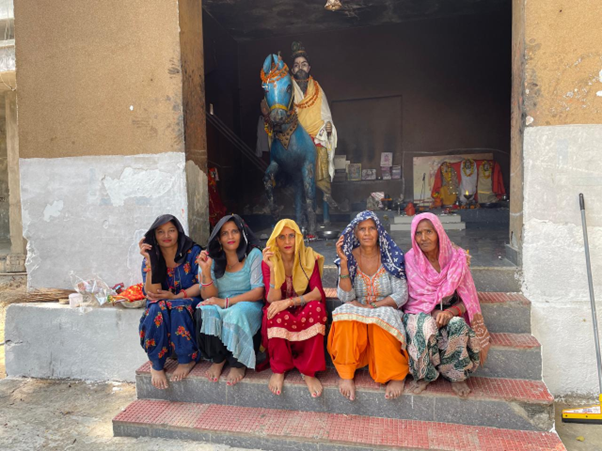
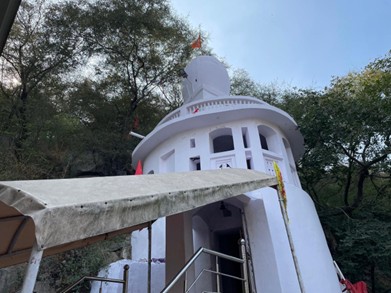
The Gujjar community of Mangar village maintains traditional rights to graze livestock and collect limited forest produce but abstains from felling or burning within the grove. The Gudariya Baba Temple, located within the forest, attracts pilgrims during major festivals, reinforcing faith-based protection norms. The Panchayat enforces these customary rules, supported by forest guards to prevent encroachment. This model of faith-driven, community-led stewardship demonstrates how intangible cultural heritage sustains tangible ecological resilience.
Women and youth contribute through eco-clubs and awareness programmes, ensuring intergenerational transfer of ecological knowledge. Such collective custodianship reflects a living tradition of decentralized, sustainable governance.
4. Objectives
- To document the biodiversity and ecological significance of Mangar Bani Sacred Grove.
- To evaluate its role as a biodiversity refugia and climate refugia in an urbanised ecosystem.
- To analyse how traditional governance aligns with the Satoyama Initiative’s principles of human-nature harmony.
- To assess threats and propose policy and community-led conservation strategies.
5. Rationale
Mangar Bani serves as an ideal model for socio-ecological production landscapes (SEPLS), where livelihoods, faith, and ecosystems co-evolve in harmony. The grove’s protection through traditional customs offers critical insights into how intangible cultural values can yield tangible ecological resilience. Documenting this case contributes to understanding how community belief systems can complement formal conservation policies in rapidly urbanising regions. Furthermore, Mangar Bani exemplifies how sacred natural sites can act as urban climate buffers and micro-refugia, offering lessons for integrating traditional ecological knowledge into urban planning and national biodiversity strategies. The findings from this case can inform replicable, community-centric conservation frameworks in other peri-urban and culturally significant landscapes across India and the Global South, reinforcing the global relevance of Satoyama’s approach to coexistent sustainability and can complement modern governance, contributing to SDGs 13 (Climate Action), 15 (Life on Land), and 11 (Sustainable Cities and Communities).
6. Activities and Significance
Mangar Bani stands as a remarkable example of how traditional ecological wisdom, spiritual belief, and collective stewardship can sustain a thriving natural ecosystem within one of the world’s most urbanised regions (Mongabay India, 2021; Sanctuary Nature Foundation, 2021). As the last remaining patch of primary forest in the Delhi National Capital Region (NCR), its significance transcends biodiversity conservation; it represents an enduring socio-ecological compact between humans and nature that mirrors the ethos of the Satoyama Initiative (Ashoka University, 2022).
6.1. Socio-Ecological Significance
Mangar Bani’s ancient Aravalli ecosystem supports high biodiversity, stabilises the local climate, and provides essential ecosystem services such as carbon sequestration, groundwater recharge, and temperature regulation. Studies estimate carbon storage of 28–32 tons C/ha and surface temperatures 2–3°C lower than urban surroundings.
Socially, the grove reinforces community cohesion and spiritual identity; participation in ritual festivals and collective maintenance fosters a sense of shared responsibility (Sudharshan et al., 2018). Economically, although extractive activities are restricted, the community benefits from ecosystem-derived services, such as improved air quality, moderated climate, and protection against soil erosion, illustrating intangible yet vital natural capital (Sanctuary Nature Foundation, 2021).
Faith in Gudariya Baba forms the core of the grove’s protection. Community taboos prohibit extraction, while the Panchayat ensures compliance through collective governance. Annual festivals reinforce social bonds and conservation ethics. By sustaining both ecological and social well-being, Mangar Bani exemplifies a nature-based resilience model that integrates cultural values with ecological functionality in peri-urban India (Ashoka University, 2022; Mongabay India, 2021).
6.2. Cultural and Community Stewardship
The Gujjar community of Mangar village plays a pivotal role in maintaining the forest’s sanctity. Their social norms prohibit resource extraction or destructive use, embodying a self-sustaining conservation ethic (Malhotra et al., 2001). Forest guards from the Haryana Forest Department collaborate with villagers to prevent encroachment, construct check-dams, and monitor wildlife corridors (Roundglass Sustain, 2023).
Active participation through eco-clubs and environmental education activities, and inclusion of women and youth has resulted in strengthening intergenerational transmission of ecological knowledge (Verchot & Biswas, 2021). These efforts show how collective custodianship, rooted in faith yet adaptive to modern realities, ensures long-term ecological stability even without monetary incentives, a hallmark of India’s sacred-grove tradition (Malhotra et al., 2001; IJEE, 2024).
6.3. Archaeological Heritage
Mangar Bani is also a remarkable archaeological site, recognised as a Palaeolithic treasure with evidence of early human habitation. It houses the subcontinent’s largest collection of Neolithic Stone Age tools and artefacts, dating back 100,000 years. Additionally, the site features ancient cave paintings from the Aravalli range, created between 20,000 and 40,000 years Before Present (BP) (Mangar Farms, 2024), firstly recognised by Harsana, the forest manager, making it one of the region’s attractions and reflecting a long history of human–nature interaction.
6.3. Alignment with the Satoyama Initiative Framework
The Satoyama Initiative outlines five interlinked perspectives for socio-ecological production landscapes and seascapes (SEPLS):
Resource Sustainability: Cultural taboos limit extraction and promote natural regeneration, sustaining forest biomass despite surrounding deforestation
Landscape Diversity: The grove’s mosaic of rocky outcrops, dry deciduous thickets, and grass patches supports diverse ecological niches
Community Governance: Informal yet effective rules enforced by the Gujjar Panchayat mirror decentralised, participatory management frameworks advocated by Satoyama
Ecosystem Services: The forest offers regulating services like carbon sequestration, temperature buffering, groundwater recharge and cultural services tied to spiritual values
Knowledge Integration: Scientific assessments by WWF-India and CEDAR complement traditional ecological knowledge (TEK), creating a hybrid management system consistent with adaptive co-management principles.
Through these synergies, Mangar Bani operates as a living SEPLS, showcasing how sacred landscapes can support biodiversity conservation, climate adaptation, and social resilience simultaneously within an expanding metropolitan frontier (Mongabay India, 2021; Ashoka University, 2022).
6.5. Broader Implications
Mangar Bani demonstrates that cultural belief systems and modern ecological science can coexist to safeguard critical habitats. Its continued survival amidst urban encroachment proves that faith-driven stewardship can rival statutory protection in effectiveness (Sanctuary Nature Foundation, 2021). Recognising and formally protecting such sacred groves as Eco-Sensitive Zones under India’s Environment (Protection) Act could bridge traditional and modern governance models (Ashoka University, 2022).
Ultimately, Mangar Bani offers a replicable framework for urban ecological sanctuary landscapes where ancient wisdom sustains modern sustainability goals and where the principles of the Satoyama Initiative find living expression in India’s oldest mountain range.
7. Results and Key Takeaways
7.1. Ecological Outcomes
- Mangar Bani remains one of the few intact primary forests of the Aravallis.
- Its dense canopy mitigates urban heat-island effects, with recorded surface temperatures 2–3°C lower than surrounding degraded lands (Roundglass Sustain, 2023).
- High carbon sequestration potential due to mature Dhau stands, estimated at 28–32 tons C/ha, aligning with the carbon values of other Indian sacred groves (IJEE, 2024).
- Continuous habitat provides refuge for forest specialists otherwise extinct from nearby areas.
7.2. Social and Cultural Outcomes
- Continued belief in Gudariya Baba sustains non-extractive behaviour.
- The grove remains a locus for cultural identity, spiritual gatherings, and ecological education.
- Active involvement of the Panchayat and youth eco-clubs demonstrates local custodianship as a resilient governance model.
7.3. Identified Challenges and Threats
- Urban encroachment, road expansion, and quarrying in the Aravalli hills.
- Ambiguous legal classification as “Gair Mumkin Pahad” (uncultivable hill) rather than a Protected Forest.
- Erosion of traditional beliefs among younger generations.
- Fire risk and invasive species (Prosopis juliflora) in peripheries.
- Increase in real estate development
7.4. Reflection of Community-driven Conservation
Culturally embedded taboos function as effective socio-ecological regulatory mechanisms, complementing formal conservation governance. The integration of Traditional Ecological Knowledge (TEK) within institutional frameworks enhances ecological compliance and adaptive co-management. Long-term conservation efficacy depends on community trust, iterative awareness processes, and participatory governance. Faith-based conservation systems must adopt adaptive, evidence-informed approaches to sustain ecological functionality amid socio-economic transformation. Empirical studies indicate that such hybrid governance models strengthen ecosystem resilience and biodiversity persistence by aligning local value systems with ecological objectives. Moreover, institutionalising TEK within conservation policies enhances adaptive capacity, ensuring socio-ecological systems remain robust under climatic and anthropogenic stressors.
Mangar Bani represents more than a relic forest, it is a dynamic socio-ecological system where culture, climate, and biodiversity intersect to sustain ecological balance and cultural identity. As a sacred grove, it functions as a potential climate refugium, mitigating temperature fluctuations, conserving soil moisture, and contributing significantly to carbon sequestration. The revival of such culturally rooted conservation practices within peri-urban landscapes can effectively address governance and ecological gaps emerging in rapidly urbanizing regions. Integrating scientific monitoring frameworks with community-based custodianship exemplifies the Satoyama principle of harmonious human-nature co-existence, fostering adaptive and inclusive conservation. Furthermore, the designation of Mangar Bani as an Eco-Sensitive Zone under the Environmental Protection Act (1986) would institutionalize its protection, ensuring both ecological integrity and the empowerment of local stewardship systems.
8. References and Bibliography
- Ashoka University. (2022). The Spirit of Conservation: The Case of Mangar Bani.
- Deswal, P. (2024). Global Assessment of Sacred Groves and Climate Refugia Potential. In IJEE, Vol. 24.
- Gulshan, P. (2023). Native Flora of Aravalli Sacred Groves.
- Malhotra, K.C., Gokhale, Y., Chatterjee, S., & Srivastava, S. (2001). Cultural and Ecological Dimensions of Sacred Groves in India. INSA, New Delhi.
- Mongabay India. (2021). Mangar on the Outskirts of New Delhi Looks to Its Past to Protect Its Future.
- Roundglass Sustain. (2023). Mangar Bani, Delhi NCR-The Urban Jungle.
- Sanctuary Nature Foundation. (2021). Mangar Bani and Other Forests.
- Verchot, L., & Biswas, S. (2021). WWF Aravalli Biodiversity Assessment Report.
- Sudharshan, A. et al. (2018). Community Governance of Sacred Groves in Northern India.
- Mangar Farms. (2024). Archaeological Documentation of Palaeolithic Artefacts in Mangar Bani.