

House of Maize (La Casa del Maíz), from milpa to served plate, a sustainable value generation experience
01.12.2025
SUBMITTING ORGANIZATION
Centro de Formación en Agroecología y Sustentabilidad AC
DATE OF SUBMISSION
09/2025
REGION
Americas
COUNTRY
Mexico
KEYWORDS
Milpa, seeds, farmer-to-farmer, agroecology, knowledge dialogs
AUTHORS
Munoz Villarreal, Oscar; Uribe Reyes, Joel; Morales Hernandez, Jaime; from the Agroecology and Sustainability Training Center AC (CEFAS) of the Network of Sustainable Agricultural Alternatives (RASA).
Summary Sheet
The summary sheet for this case study is available here.
Case Study in Spanish
The case study in Spanish can be accessed here.
1) Background
Maize (zea mays) has been a central element in the formation of Socio-Ecological Production Landscapes in Mesoamerica. The center of Mesoamerican agriculture for 9,000 years has been maize, as the basis for diverse agro-systems that in Mexico have been called milpa1 —a polyculture composed of maize in association with beans and squash (the three sisters)— and around which up to 40 plant and animal species can develop. Since then, maize and its milpa have organized the rural territory in Mexico and are the vital socio-ecological landscape in the country’s culture and food. FAO has recognized the milpa as one of the Globally Important Agricultural Heritage Systems (GIAHS). Mexican cuisine, based on maize, has also been named an Intangible Heritage of Humanity by UNESCO. In the milpa and in the cuisine, a great variety of plants, insects, and animals are cared for, reproduced, conserved, transformed, and consumed by peasant families. Each family member has a fundamental role in the value generation chain, as well as in the preservation of this biocultural heritage.
1 We rather keep the name milpa because its meaning is closer to Socio-ecological Production Landscape, while the name three sisters refers to three of the cultivated species: maize, beans and squash.
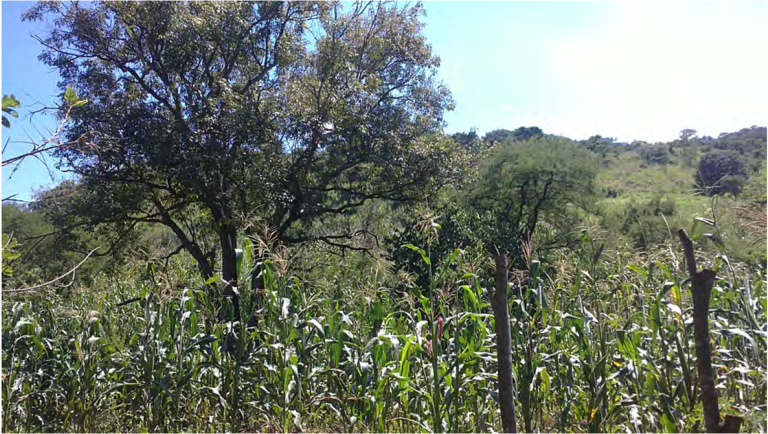
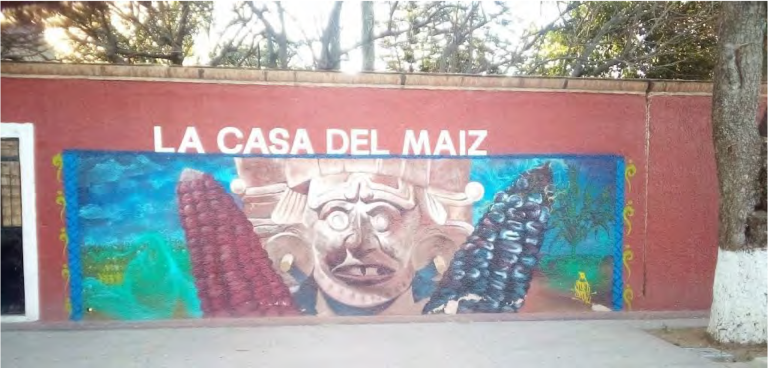
House of Maize is located in the village of San Juan Evangelista, in the municipality of “Tlajomulco de Zuniga”, state of Jalisco, Mexico, and it is a project created by Ezequiel Cardenas and his family. It articulates two world heritage sites: milpa and Mexican cuisine. This project emerged from a movement of more than 25 years called the Sustainable Agricultural Alternatives Network (RASA), which seeks the recovery of native seeds and the defense of food sovereignty against a civilizing model that threatens territories and cultures.
House of Maize project promotes the conservation and sustainable management of Socio-ecological Production Landscapes and Seascapes (SEPLS). The milpa, the community’s ancestral cultivation system, is a clear example of a SEPLS, as it has been a dynamic mosaic where the harmonious interaction between people and nature has maintained biodiversity and provided goods and services necessary for sustenance for generations. The main objective of House of Maize is to strengthen the native maize culture and generate value from the milpa. The project seeks to “promote self-sufficiency and food sovereignty” by revaluing maize as a central element of identity and community life. This approach aligns directly with Strategic Objective 5 of the Satoyama Initiative: “Development of Sustainable Value Chains”.
2) Socioeconomic and environmental characteristics of the area
San Juan Evangelista is in an environment that has been historically agricultural, where communities have coevolved with the physical landscape. This region has experienced significant changes in its landscape and communities as they face pressure from industrial agriculture. The municipality is known for being a center for the production of berries and other crops of high economic value, which are often grown under the model of protected agriculture or in greenhouses.
The boom in berry production in Jalisco is notable, with a cultivated area exceeding 10,400 hectares in the state, which represents 28% of the national area. While this growth has positioned Jalisco as a leader in the sector, it has also brought challenges. The initial investment for this type of crop is very high (approximately $50,000 USD), which often excludes small farmers, who opt to rent their land to companies. In addition, this intensive agriculture model can have a negative impact on the environment by promoting the destruction of SEPLS and their homogenization by monocultures and greenhouses, the intensive use of water, and the application of pesticides, which threatens local biodiversity, the availability of water resources, and sustainable practices.
In this model, a single product is produced on which the producer’s income depends to buy food that is produced outside their community, some in other countries. The selling price of the product is set in another country, and the price of the food they buy is also set in another country.
The product travels thousands of kilometers to reach the customer, passing through intermediaries, consuming significant amounts of water and energy along the way, thus contributing to greenhouse gas emissions and climate chaos. While this increases the price of the product for the customer, it does not represent the real cost of the compensatory measures that would entail cleaning the water, capturing greenhouse gases, the loss of people’s health, or the replacement of lost biodiversity.
Furthermore, in this model, there is a disconnection between the producer and the customer. The producer is unaware of the customers’ culinary preferences, their purchasing power, or their social commitment, nor can they recycle the nutrients from the waste of the products consumed. The customer is also unaware of the producer, is unaware of their production practices and the impacts that the product they consume has on the landscape.
In this context, the approach of House of Maize is presented as an alternative to this model, focusing on strengthening the milpa as an agroecological system that seeks to recreate the SEPL, protecting the environment, regenerating the social fabric, and guaranteeing the food sovereignty of the community, acting against deforestation and monoculture. The project not only focuses on production but also on strengthening the social fabric, uniting families, young people, and women to ensure that the economic and cultural benefits remain in the community.
3) Objective and rationale
General Objective: to analyze a sustainable experience of value creation, from the milpa to the served plate.
Rationale: it is necessary to understand and make visible the impact of experiences like House of Maize that constitute multidimensional alternatives that recreate and preserve bio-cultural heritage against a model that is eroding agro-biodiversity. By focusing the work on milpa and native maize, House of Maize creates a sustainable system that connects production in the field with the consumer’s table. This approach not only ensures that the economic and cultural benefits remain in the community but also protects the environment by promoting diversity and agroecological practices. The experience of House of Maize demonstrates how it is possible to build a “circular and local value chain” where value is maintained and distributed equitably within the community, from planting in the milpa to the served plate.
Outcomes: to contribute to the strengthening of this model by socializing its ecological, social, productive, political, cultural, ethical, and economic benefits.
4) Detailed description of activities
House of Maize carries out a series of interconnected activities that cover the entire “sustainable value chain”, from production to consumption, and that are intrinsically linked to the strategic objectives of the IPSI.
Ecosystem Restoration and Conservation (Strategic Objectives 4 and 3)
- Production in the milpa: The promotion of agroecological and traditional agricultural practices that respect the environment and promote biodiversity is the basis of their work. The diversification of production and the recovery of ancestral knowledge play a primary role in the continuation of eco-social evolution, making the community and the environment more adaptable and resilient to economic and environmental challenges, such as price crises or climate change.
- Preservation of bio-cultural heritage: They currently conserve about 30 varieties of maize, in addition to teocintle (the “grandfather” of maize) and other varieties of beans and squash, which contributes directly to the conservation and restoration of Socio-ecological Production Landscapes and Seascapes (SEPLS) and positions the milpa as an Other Effective Area-Based Conservation Measure (OECM). Furthermore, the raw material is secured in a resilient and sustainable way, where care for the environment, carbon capture, and the preservation of native seeds are an added value.
Development of Sustainable Value Chains (Strategic Objective 5)
- Local value chain: The initiative creates a chain that goes “from the milpa to the plate”, eliminating intermediaries and ensuring that the added value of the product directly benefits the community.
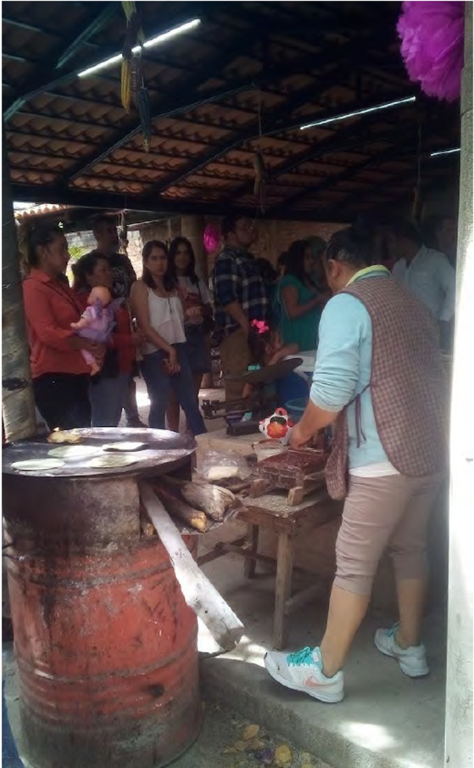
- Processing and creation of products: The harvested maize is transformed into various food products, such as tortillas, tlacoyos, sopes, atole, tamales, and liquor. This stage adds “added value” to the primary product, diversifying the offer and creating new economic opportunities for the community. This process reinforces food culture and social relationships by increasing family coexistence, where each member has a specific responsibility that is valuable for the sustainability of the project.
- Direct marketing: Maize products are offered directly to consumers, eliminating intermediaries, reducing greenhouse gas emissions and water consumption, and ensuring a fair price for producers and consumers. This “fair and direct marketing” strategy is fundamental for a sustainable value chain. The relationship with Silks Agroecological Market Participatory Guarantee System also builds trust in the direct producer-consumer relationship and commitment between both parties.
Co-production, Management, and Dissemination of Knowledge (Strategic Objective 1)
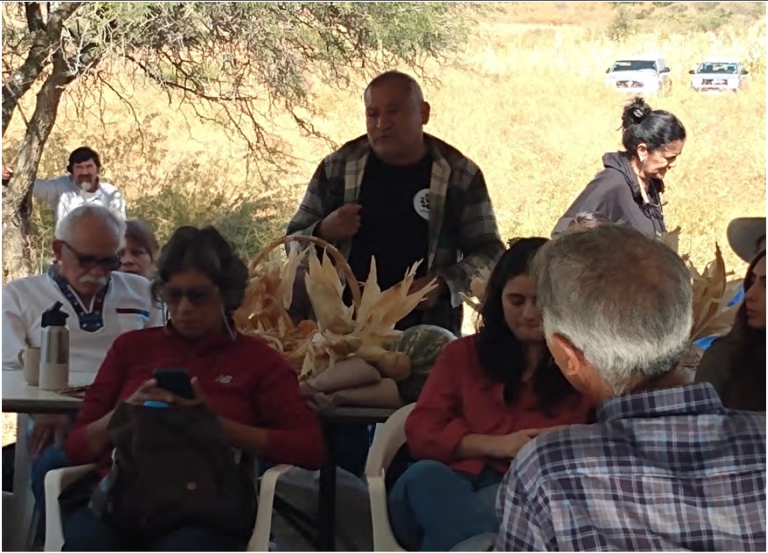
- Revaluation and dissemination: The project organizes events and meetings for the exchange of knowledge, seeds, and practices and has participated in the Our Maize, Our Culture Meetings organized by RASA; in these events, farmers from other communities and municipalities participate, as well as consumers from the city and academics. The project facilitates the exchange of traditional and agroecological knowledge, fostering the dissemination of sustainable practices and favoring the creation of new knowledge that helps preserve the environment.
- House of Maize has become a Local Native Seed Fund, and its founder, Ezequiel, is socially recognized as a Maize Guardian. These activities strengthen the basis of the value chain by preserving traditional knowledge and genetic diversity, as well as the uses, traditions, knowledge, and flavors linked to agro-biodiversity. Collaboration with other collectives, universities, and government agencies has been fundamental, which has resulted in documentaries such as Made of Maize (“Hechos de maíz”) or the documentary House of Maize (“Casa del Maíz”).
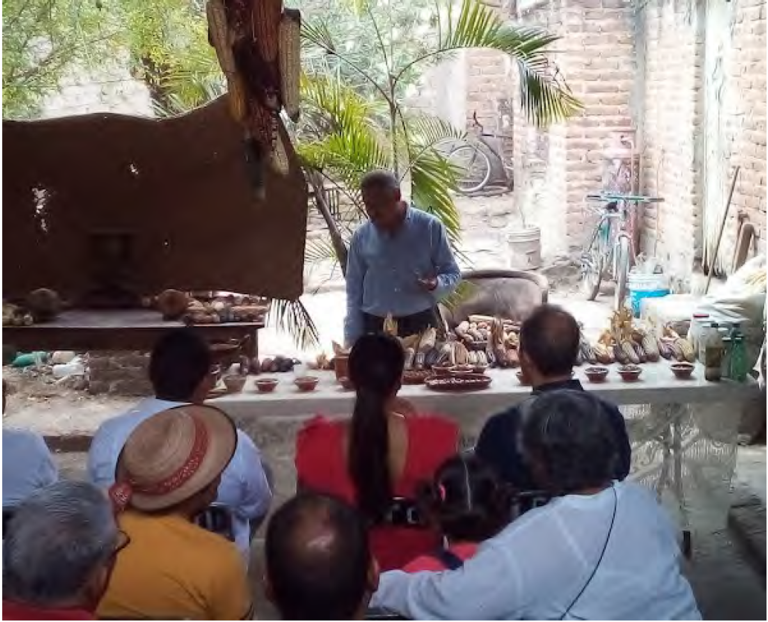
- Education and awareness: Workshops and meetings are held that educate the new generations about the importance of native maize, agroecology, and food culture. This activity closes the cycle of the value chain by fostering the appreciation of the product and the knowledge of its origin, which reinforces the demand for sustainable products.
Institutional Frameworks and Capacity Development (Strategic Objective 2)
- Ethical construction: The project promotes an ethic of care and respect, both for the land and among people. Through its activities, House of Maize fosters social and ecological responsibility, teaching that agriculture is not just a productive activity but also an act of moral commitment to future generations and biodiversity. This implies practices such as the use of native seeds, the prohibition of agrotoxins, and the promotion of fair and transparent commercial relationships within the community.
- Governance: The project strengthens the community’s capacity to manage its own agricultural landscape (the milpa) in a sustainable and autonomous way, through social organization and collective decision making.
- Political advocacy: The project actively participates in dialogue and community organization to influence local and regional policies. Through the defense of food sovereignty and the promotion of agroecology, House of Maize is a political actor that seeks to protect the rights of farmers and native seeds. Their grassroots work is the foundation for resistance against extractivist agricultural models and the promotion of sustainable alternatives that benefit the community as a whole.
5) Results and lessons learned
- Multiplication of seeds: Peasant resistance has managed to multiply native maize seeds, guaranteeing their preservation and availability
- Strengthening of the community: The activities of knowledge exchange and the creation of networks have strengthened the social fabric, uniting families, young people, and women around a common project.
- Creation of economic value: By directly transforming and marketing the fruits of the milpa, a fairer and more sustainable economic system has been created for the community. This result demonstrates the effectiveness of developing sustainable value chains at the local level.
- Greater resilience: The promotion of the social and productive milpa has made the community more resilient to external crises, whether caused by economic or environmental factors.
- Better nutrition: It increases the quantity, quality, and availability of nutritious food, without agro-chemicals, and promotes the community’s food sovereignty and self-sufficiency through the production of native maize and other milpa species; this ensures access to nutritious and culturally appropriate food, which is fundamental for the achievement of the Human Right to Food.
- Positive impacts on the environment: By promoting agroecology and the protection of biodiversity against monoculture and deforestation, the initiative directly contributes to ensuring a sustainable environment for the community, in line with the Right to a Healthy Environment.
- Living culture: The revaluation of native seeds and the milpa system is not just an agricultural practice but an act of preserving cultural identity. The project strengthens people’s connection to their roots and traditions by reproducing and offering people the fruits of the milpa transformed into culturally valued and appropriate food, which is exercising the Right to Culture. Furthermore, the culture is renewed because the families that produce the food and transform it are valued, not only for being providers but because they are “caretakers” or “Guardians”.
- Dignified work for a dignified life: The direct and fair marketing of their products ensures that the economic benefits stay in the community and empowers local producers because they decide how, when, and how much to work, from planting to selling, as well as how much their work is worth in the form of a price on the products offered to the community. In this way, the Right to Work is realized.
A key lesson is that sustainable development is not just about agricultural production but also about cultural and social regeneration. Agriculture is a tool for peace and sovereignty when it is linked to a social context that values people and their ancestral knowledge and when it is integrated into value chains that directly benefit producing communities.
6) Key messages
Maize is culture and life: Maize is not just food but a fundamental pillar of identity, history, and community.
Sowing is an act of resistance: Cultivating native seeds and protecting the milpa is an act of resistance against cultural homogenization and dependence on an agro-industrial model.
The milpa is a social fabric: The milpa system not only produces food but also weaves social networks, knowledge, and experiences that nourish the community.
Agroecology for peace: The practice of agroecology, rooted in local traditions, is the path to building lasting peace.
Sustainable value chains for sovereignty: The creation of local, fair, and sustainable value chains is crucial to empowering communities and ensuring their food and economic autonomy.
Participatory Guarantee Systems democratize the food system: The direct relationship between producers and consumers strengthens the mutual commitment to healthy food that protects this landscape and its culture as a heritage of humanity.
7) References and bibliography
Bartra, A. (2025) “Todo es milpa”, en La Jornada del Campo. Núm. 215, Alimentos ancestrales.
Bernardo Hernández, M; Mota, C. (2017) La defensa y conservación de la diversidad de maíces nativos por agricultores agrupados en la Red de Alternativas Sustentables Agropecuarias de Jalisco, México, coedición con Semillas de Vida.
Cortez Bacilio, M.; Alvarado Castro, E.; Morales Hernández, J.; Hernández Ortiz, P.; Sarmiento Sánchez, A.; Montaño Cruz, F.; Garbers, M.; Jönsson, M.; García Martínez, L. E.; Ávila Bello, C.; Arias Cruz, N. (2023) Cuidando nuestras semillas: Experiencias campesinas en la conservación, defensa y protección del maíz nativo en México. Coedición con Satoyama y Semillas de Vida.
Gerritsen, P. y Morales Hernández, J. (2022). “Experiencias agroecológicas en el estado de Jalisco, Occidente de México: avanzando hacia las agriculturas sustentables” en Santos, A. (editor). Sembramos, comemos y vivimos: saberes agroecológicos desde los sures, pp. 93 a 95. Editorial Comares. Granada, España
Morales Hernández J. (2012) “Las agriculturas sustentables y los pasos hacia la soberanía alimentaria: Una experiencia en Jalisco, México” en Cuellar, M.; Calle. A.; Gallar, D. (eds.) Procesos hacia la soberanía alimentaria, Editorial Icaria, Barcelona.
Morales Hernández, J. (2014) “El cuidado y defensa del maíz nativo en México: resistencias y acciones ciudadanas ante los transgénicos” en Análisis Plural, primer semestre de 2014. Tlaquepaque, Jalisco: ITESO. http://hdl.handle.net/11117/1478
Morales Hernández, J.; Uribe Reyes, J.; Alvarado Castro, E. (2025) “El cuidado y mejoramiento de los maíces nativos en Jalisco: La experiencia de la Red de Alternativas Sustentables Agropecuarias” en La Jornada del Campo. Núm. 209, Semillas.
Muñoz Villarreal, O. (2012) Situación de las hijas e hijos de campesinos agroecológicos de la Red de Alternativas Sustentables Agropecuarias, en Jalisco, México. Tesis de maestría. Universidad Pablo de Olavide, España.
Muñoz Villarreal, O., Uribe, Reyes; J. Morales Herández, J. (2025). Our Maize, Our Culture: Meetings and Native Seeds Funds in the Improvement of the Milpa as Socio-Ecological Production Landscape. [online] Disponible en: https://satoyamainitiative.org/case_studies/our-maize-our-culture-meetings-and-native-seeds-funds-in-the-improvement-of-the-milpa-as-socio-ecological-production-landscape/
Roldan Roa Ma.Elena, Almeida Lujan Catalina (2018) La agricultura de traspatio en San Juan Evangelista, Tlajomulco en Morales-Hernández, Jaime (coord). Los espacios rurales y la ciudad: agriculturas periurbanas y sustentabilidad en el Área Metropolitana de Guadalajara, Complexus Vol 8. Guadalajara: ITESO
Uribe-Reyes, J. (2025) Elementos de Formación en Agroecología en la Red de Alternativas Sustentables Agropecuarias (RASA): un acercamiento al Centro de Formación en Agroecología y Sustentabilidad (CEFAS). Tesis de maestría Universidad Internacional de Andalucía. España. https://dspace.unia.es/
8) Figures, tables and photos
Photo 1: Milpa. Taken from: RASA archive.
Photo 2: Mural of House of Maize. Taken from: House of Maize.
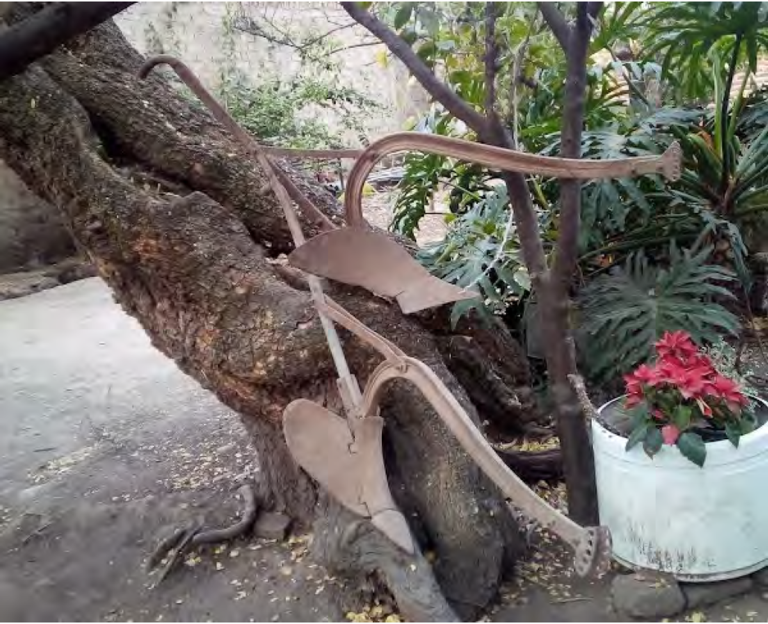
Photo 3: Traditional plows. Taken from House of Maize.
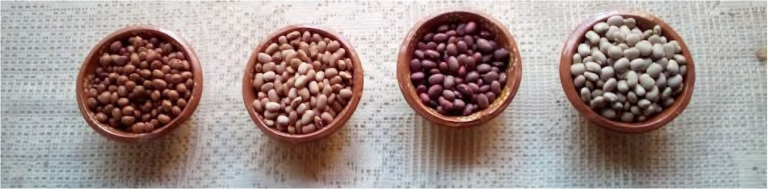
Photo 4: Beans varieties. Taken from: House of Maize.
Photo 5: Cooking and preparing corn tortillas for the participants. Taken from: House of Maize.
Photo 6: Ezequiel Cardenas at 2024 Our Maize, Our Culture Meeting. Taken from: RASA archive.
Photo 7: Workshop. Taken from. House of Maize.
9) Web links of relevant organizations and projects
Sustainable Agricultural Alternatives Network: https://www.facebook.com/RASA.Jalisco/
Agroecology and Sustainability Training Center: https://www.facebook.com/CEFAS.AC.JAL/
House of Maize: https://www.facebook.com/lacasadelmaiztlajomulco/
Silks Agroecological Market: https://eljilote.org/
10) Recommendations for further reading
1) Articles
Gerritsen, P.; Morales Hernandez, J. (2009) “Experiencias de agricultura sustentable y comercio justo en el estado de Jalisco, occidente de Mexico” en Pueblos y Fronteras Digital, Vol. 4, Num. 7, Junio – Noviembre 2009, pp. 187-226.
Morales Hernandez, J. (2022) “La Agricultura industrial y la disputa por los territorios rurales” en Nuestro Maiz, Nuestra Cultura, No. 19. RASA. Mexico. https://goo.su/Jn7Xz9i
2) Book chapters
Morales Hernandez, J.; Alvarado-Castro, E.; Velez Lucero, L. (2017) “Los saberes campesinos y la construccion de conocimientos hacia agriculturas mas sustentables: Una experiencia desde Jalisco, Mexico” en Macias, A.; Sevilla, L. (coord.) Voces rurales: los saberes de los pequenos productores de Mexico y Latinoamerica. Universidad de Guadalajara. Mexico.
3) Thesis
Ballesteros Martinez, Gabriela (2013) Caracterizacion morfologica de las razas de maiz Elotes Occidentales y Ancho en el estado de Jalisco. Guadalajara University, Mexico.
4) Books
Bravo, Elizabeth; Rojeab, Batul (eds.) (2012) Hijos del maiz. Maiz patrimonio de la humanidad.
Grain (2014) No toquen nuestro maiz. El sistema agroalimentario industrial devasta y los pueblos en Mexico resisten.
INPI (2021) Los herederos del maiz. Mexico
Mendez Dominguez, C. (coord.) (2021) Milpa. Pueblos de maiz. Diversidad y patrimonio biocultural de Mexico.
Serratos Hernandez, Jose Antonio (2012) El origen y la diversidad del maiz en el continente americano.
Tribunal Permanente de Los Pueblos (2013) Dictamen de la Tercera Audiencia Tematica. Violencia contra el maiz, la soberania alimentaria y la autonomia de los pueblos.
Villa, Veronica; et al. (eds.) (2012) El maiz no es una cosa. Es un centro de origen.
5) Documentaries
About RASA
Bernardo Hernández, M.; McCulligh, C.; Romo Arias, X.; Macías, E. (2000) Semilla de la esperanza. La agricultura orgánica. 24 min. México
Bonilla, I. (2011) Voces y miradas del campo en Jalisco. 8 min.
– https://www.youtube.com/watch?v=WFlx7LX8Aiw
Casarín, P. K. (2010) VII Encuentro del Maíz. Una breve. 6 min.
– https://www.youtube.com/watch?v=kxCWcBqRUAQ
Pulido, B. (2001) RASA. Red de Alternativas Sustentables Agropecuarias de Jalisco. 25 min. México
Valencia, Fernando (2021) Semillas, el legado de la tierra. 16 min. Mexico.
– https://www.youtube.com/watch?v=lXy4ZYc3glA
About House of Maize
Ojeda, A. (2024) Hechos de maíz. 32 min.
– https://www.youtube.com/watch?v=FKHjpJRKF_U
Mendoza, L. F. (2025) Casa del Maíz – San Juan Evangelista, Tlajomulco de Zuñiga, Jalisco, 8 min.
– https://www.youtube.com/watch?v=wg06cayKIXs
11) Authors review
Oscar Munoz Villarreal: Philosophy and Social Sciences (ITESO) and Religious Sciences (UIA), Master in Agroecology (Pablo de Olavide, Spain). He worked for six years in indigenous communities in Chiapas, where he collaborated with the Social Organization Xi’Nich’. Since 2009 he collaborates with RASA and since 2016 he is president of CEFAS.
Jaime Morales Hernandez: Agronomist engineer (ITESM) Master and PhD in Agroecology (Cordoba University, Spain), small organic farmer, founder of RASA and research professor at CEFAS.
Joel Uribe Reyes: Computer Systems Engineer, Master in Philosophy and Social Sciences (ITESO), Master in Agroecology (UNIA, Spain), Studies in Environmental Management and Theology (PUJ, Colombia), Beekeeper, Teacher, Coordinator of CEFAS since 2023, collaborator in RASA since 2013, with experience working with farmers and indigenous communities in Mexico and Colombia.