

Young People's Diverse Contributions to Achieving SEPLs: A Case Study from GYBN
25.11.2025
SUBMITTING ORGANIZATION
Global Youth Biodiversity Network (GYBN)
DATE OF SUBMISSION
07/2025
REGION
Global
COUNTRY
Pakistan, Dominican Republic, Niger, Colombia
KEYWORDS
youth empowerment, intergenerational equity, youth contribution, traditional knowledge, transformative education
AUTHORS
Christian Schwarzer, Co-Founder and Global Coordinator
Shruthi Kottillil, GYBN International Team
Sudha Kottillil, GYBN International Team
Summary Sheet
The summary sheet for this case study is available here.
a. Background
Youth contributions to biodiversity conservation remain largely overlooked and undervalued, despite having significant on-ground impact. This is particularly true in the context of Socio-Ecological Production Landscapes and Seascapes (SEPLs) where biodiversity conservation, livelihoods, local knowledge and traditional practices are intertwined. SEPLS are sustained through long-term, place-based relationships between people and nature, yet youth are often excluded from decision-making spaces due to assumptions about their age or experience. This perspective fails to recognize that many young people are actively contributing to the revitalization of SEPLS, through diverse actions: community-based conservation, agroecology, cultural renewal, ecological entrepreneurship, capacity-building, and advocacy. Youth, particularly from the Global South are marginalized in conservation governance and face exclusion from formal-decision making spaces despite active participation in grassroot biodiversity work (Sithole et al., 2024; Delgado and Perez-Aleman, 2021). Vulnerable groups such as children, youth, and women need sustained access, engagement in decision making spaces to address challenges of environmental governance, social justice and equity (Delgado and Perez-Aleman, 2021). IPSI promotes the conservation and sustainable use of biodiversity through a multi-stakeholder approach, recognising and supporting youth contributions becomes essential for long-term resilience of these systems. It also ensures that these dynamic systems evolve with the needs and capacities of younger generations.
b. Socioeconomic, environmental characteristics of the area: including benefits and threats to human-nature relationships
This case study explores multiple projects that have been conducted globally by the youth. It spans projects mainly from 3 world regions – Asia, Africa and Latin America and the Caribbean (LAC). These regions are home to diverse ecological landscapes from coastal zones, forests, and freshwater systems to drylands and mountainous regions. These support rich biodiversity and millions of rural and urban communities. In both continents, the human–nature relationship is deeply intertwined with livelihoods, food security, and cultural identities. The socioeconomic characteristics of the 2 regions include –
i. Rural dependency on nature: In all three regions, many rural communities rely heavily on forests, fisheries, and farmland for subsistence and informal income. In the Amazon, Sahel, and parts of Southeast Asia, traditional livelihoods are deeply intertwined with local ecosystems (FAO, 2020; IPBES, 2019; de la Torre et al., 2020).
ii. Poverty and inequality – Over 40% of people in sub-Saharan Africa live below the poverty line (World Bank, 2023), which leads to reliance on natural resource extraction for survival and income (Barrett et al., 2020).
iii. Urbanization and development pressures – Rapid urbanization and extractive-led development—mining in the Andes, hydropower in Southeast Asia, oil in West Africa—often result in land grabs, environmental degradation, and weakened local control over resources (UN-Habitat, 2020; Bebbington et al., 2018).
iv. Youth demographics and employment – Youth unemployment and underemployment push young people into informal and sometimes unsustainable resource-based work (e.g., small-scale mining, unregulated fishing, charcoal production) across all three regions (ILO, 2022). This affects ecosystems and weakens the long-term human–nature connection.
Some of the environmental characteristics include
i. Biodiversity hotspots – The regions host globally significant biodiversity areas: the Amazon Basin, Congo Basin, Indo-Burma, Mesoamerica, and Caribbean islands are all conservation priorities. These ecosystems provide crucial services like water regulation, carbon storage, and climate stabilization (Myers et al., 2000; Mittermeier et al., 2011).
ii. Climate vulnerability – These regions are highly vulnerable to climate change. The Caribbean faces intensified hurricanes and sea-level rise; Africa and parts of Asia endure
droughts and floods; Latin America contends with glacier loss, wildfires, and rainfall variability (IPCC, 2022).
iii. Environmental degradation – Land degradation affects over 65% of Africa’s land and significant parts of Asia (UNCCD, 2022), driven by deforestation, mining, agriculture, and overfishing. LAC has some of the world’s highest rates of deforestation, while marine and freshwater systems in all regions are under stress (UNCCD, 2022; WWF, 2022).
Considering such close interlinkages with nature and natural resources the benefits and threats to Human–Nature Relationships are multifold –
i. Cultural and spiritual value – Many communities maintain sacred groves, ritual forests, community-led fishing practices and traditional ecological practices that reflect strong cultural ties to nature (Gadgil et al., 1993; Cocks, 2006).
ii. Ecosystem services – Forests and coastal systems provide materials for shelter, fuel, medicine, and food, acting as safety nets during economic or climatic shocks (Shackleton et al., 2007).
iii. Community stewardship – Community-led conservation initiatives, such as Locally Managed Marine Areas (LMMAs) in the Western Indian Ocean or Joint Forest Management and SEPLS projects in India, show effective models of nature stewardship (Govan et al., 2009; Agarwal, 2001).
iv. Land grabs and displacement – Large-scale agribusiness, conservation interventions, and energy projects frequently displace communities, undermining their access to nature and traditional governance systems (Borras et al., 2011; Fairhead et al., 2012; Ojeda, 2012).
v. Loss of Traditional and Ecological Knowledge (TEK) – Changing land tenure, migration, and formal education systems often erode intergenerational knowledge (Berkes et al., 2000).
vi. Market pressures – Demand for global commodities like timber, palm oil, and fish leads to overexploitation and marginalization of small-scale harvesters (Crona et al., 2016).
vii. Policy gaps and governance challenges – Conservation policies often exclude local communities or lack enforcement, weakening both ecological outcomes and human well-being (Ostrom, 1990; Ribot, 2004).
c. Objective and rationale: including intended outcomes
The role of youth in biodiversity conservation, particularly within Socio-Ecological Production Landscapes and Seascapes (SEPLS), is often undervalued in mainstream conservation narratives and governance. However, across Asia, Africa, and LAC, young people are leading innovative and context-specific actions that sustain and revitalize SEPLS. Their initiatives being grounded in local knowledge systems, cultural values, with a deep connection to place, offer unique and transformative approaches to conservation and sustainable use. This case study aims to document and analyze youth-led activities facilitated through the National Chapters of the Global Youth Biodiversity Network (GYBN) whose objectives are
i. Analyse the types of projects undertaken by the different GYBN National Chapters that contribute to nature conservation and SEPLS stewardship
ii. Assess how these projects align with the principles and framework of the Satoyama Initiative particularly with respect to multi-stakeholder engagement, co-management, biocultural diversity and community resilience
iii. Highlight the importance of including youth voices in nature-related decision making especially for those from the Global south who face structural barriers and exclusion despite their on-ground contributions
iv. Understand the challenges, successes and enabling conditions hat shape youth participation in SEPLS, including gaps in support, governance inclusion and access to resources
v. Position youth leadership as critical to the long-term sustainability and resilience of SEPLS by promoting intergenerational equity, innovation and community-rooted conservation
We see this as a model or case study to emphasise the importance of the youth contributions and seeks to reframe the narrative around youth not merely as beneficiaries of conservation efforts but as active agents of change and knowledge holders. The study also emphasizes the need for inclusive, multi-stakeholder approaches (including youth) in the planning, implementation and governance of SEPLs and related initiatives.
d. Detailed description of activities: including how the case study is in line with the conceptual framework of the Satoyama Initiative
The present case study presents a review of the activities undertaken by youth from the Global Youth Biodiversity Network (GYBN) in their countries (local and national level). GYBN operates national chapters in 66 countries across 5 regions (Asia, Africa, Europe, Latin America & the Caribbean, and North America), where youth organise themselves to address biodiversity loss in ways that reflect their local priorities and context. Each chapter independently designs and implements activities based on the needs and interests of young people in their country. GYBN maintains a record (through reports) of these initiatives and activities undertaken by the national chapter. For this study, we reviewed these reports to identify and analyze youth-led activities that contribute to SEPLS, aligning them with the conceptual framework of the Satoyama Initiative.
The conceptual framework that best aligns with the present case study is “Exploring new forms of co-management systems or evolving frameworks of ‘commons’ while respecting traditional communal land tenure.”
This framework is particularly relevant as the diverse activities led by young people from GYBN contribute to empowerment, capacity building, the identification of equitable management practices, and advocacy for the meaningful inclusion and engagement of marginalized communities. These efforts reflect a shift toward more inclusive and participatory models of governance that recognize the role of youth in sustaining socio-ecological systems. Young people are working with Indigenous and local communities, to identify inclusive, better and effective management strategies that respect communities, their traditions and knowledge. Out of the 6 ecological and socio-economic perspectives of the Satoyama Initiative, the present case study is in line with the following:
-Recognition of the value and importance of traditions and cultures.
– Multi-stakeholder participation and collaboration in sustainable and multi-functional management of natural resources and ecosystem services.
– Contributions to sustainable socio-economies including poverty reduction, food security, sustainable livelihood and local community empowerment.
– Improved community resilience to achieve multiple benefits through ecosystem-based approaches.
e. Results and lessons learned
The results reflect a survey and form that the National Chapters had to submit following the completion of their projects and fellowship. Each of the projects has been detailed below.
i. Environmental education, youth engagement
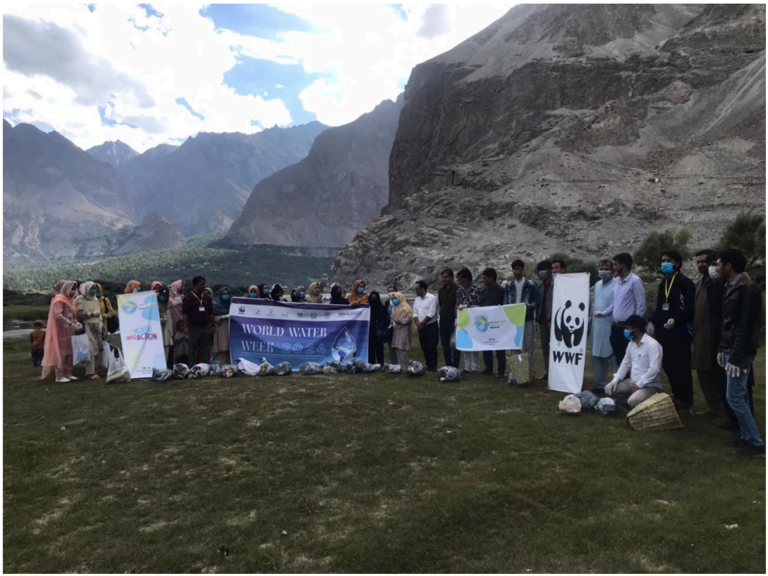
GYBN Pakistan’s “Generation Green Fellowship” strengthened youth engagement in biodiversity conservation through education, capacity building, advocacy, and hands-on action. Targeting ages 8–35, the project fostered stewardship in urban and rural socio-ecological
landscapes. The outcomes are in line with the Satoyama Initiative and objectives of the case-study include –
– Reached ~900 youth (including ~400 women) through 30 in-person biodiversity education sessions, 3 plantation drives, and the development of a biodiversity toolkit, fostering awareness and action. This was in line with the strengthening local stewardship and ecological literacy in production landscapes emphasizing Satoyama’s principle sustainable use of biodiversity in SEPLS.
– Trained 50 young individuals under a Training of Trainers model, enabling decentralized conservation education and sustained youth leadership at the community level enhancing resilience and self-sufficiency in SEPLs through local leadership.
– Contributed to 3 biodiversity policy consultations (2 provincial, 1 national), amplifying youth voices (particularly from the Global South) in formal decision-making spaces like NBSAPs resulting in inclusive governance and co-management, ensuring that grassroots actors (especially youth) shape SEPLS-related policy frameworks.
– Collaborated with 7+ partners across education, civil society, and government sectors, demonstrating effective multi-stakeholder engagement in support of biocultural conservation resulting in multi-stakeholder collaboration, a key pillar of the Satoyama Initiative.
– Leveraged social media to reach over 3,500 people, using storytelling and interactive content to advocate for biodiversity and showcase youth-led conservation efforts contributing to intergenerational knowledge transfer and biocultural connectivity, reinforcing Satoyama’s vision of collective ecological consciousness across society.
ii. Multi-stakeholder capacity building, traditional knowledge and intergenerational partnership
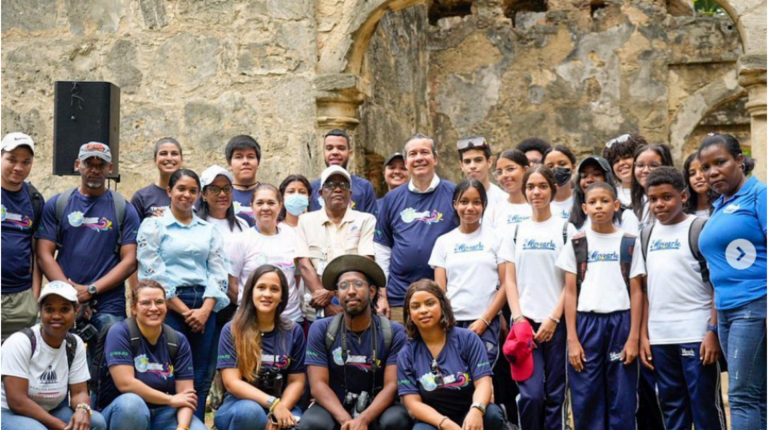
Dominican Republic Youth Biodiversity Network’s project “Intergenerational Equity Meets Southern Traditional Knowledge” focussed on capacity building and knowledge sharing between youth and elders with a focus on traditional knowledge and sustainable use of biodiversity. This project included youth from Juan de Herrera, a rural community in the south of the Dominican Republic, and elders from Mano Amiga Salud y Vida (MASAVI) who have been trained and taught techniques for preparing medicines based on the traditional knowledge of the region with native and endemic species. The outcomes of the project include:
– Strengthened understanding among youth of the importance of traditional ecological knowledge in sustaining local biodiversity.
– Creation of intergenerational partnerships, enabling youth to support and contribute to MASAVI’s work.
– Increased awareness of the need for youth to continue the sustainable use of endemic species through traditional practices.
– A reciprocal understanding with MASAVI elders recognizing the needs, ideas, and perspectives of youth.
– Planning next steps for training and inclusion of youth as active members of MASAVI.
This case study clearly aligns with the Satoyama Initiative’s vision of promoting the sustainable use and conservation of biodiversity in socio-ecological production landscapes through community participation, traditional knowledge, and multi-stakeholder collaboration. Specifically, it reflects several key components of the Satoyama Initiative’s Three-Fold Approach:
1. Conservation of biodiversity: The project focuses on the sustainable use of native and endemic species, contributing directly to in-situ conservation of biodiversity in SEPLS.
2. Sustainable use of natural resources: Through traditional medicinal practices, the project promotes culturally rooted, sustainable resource use practices.
3. Integration of traditional and modern knowledge: By facilitating intergenerational learning, the project bridges traditional ecological knowledge with the interests and capacity of today’s youth, ensuring continuity and innovation.
iii. Multi-stakeholder engagement, conflict sensitivity and context adaptation
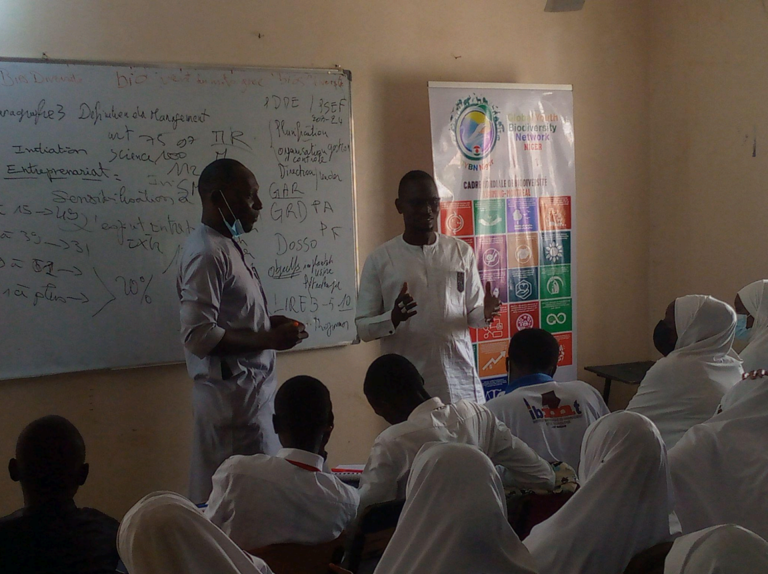
The GYBN Niger Fellowship project mobilized youth across eight communities through biodiversity education, conflict-sensitive outreach, and tree-planting initiatives. It strengthened youth engagement in national policy processes and built multi-stakeholder partnerships despite challenges like political instability and limited resources. The outcomes of the project were –
– Conducted awareness campaigns and educational events on the Convention on Biological Diversity (CBD), including youth rights in biodiversity decision-making, and participated in national processes like NBSAPs and NDCs aligning with Satoyama’s emphasis on inclusive governance.
– Organized onsite and digital education workshops across 8 communities, reaching 200+ youth, including children and women, and addressing environmental protection and conflict sensitivity supporting Satoyama’s principles of biocultural diversity and human-nature harmony through context-specific, peace-sensitive engagement.
– Planted 300 Moringa seedlings in degraded areas to enhance food security and biodiversity regeneration thereby contributing to SEPLS revitalization, echoing Satoyama’s call for sustainable resource use and ecological resilience.
– Established 7 partnerships with youth groups, NGOs, and government entities, including the Ministry of Environment and the National Council on Sustainable Development leading to multi-stakeholder collaboration model in managing complex SEPLS landscapes.
iv. Policy, advocacy
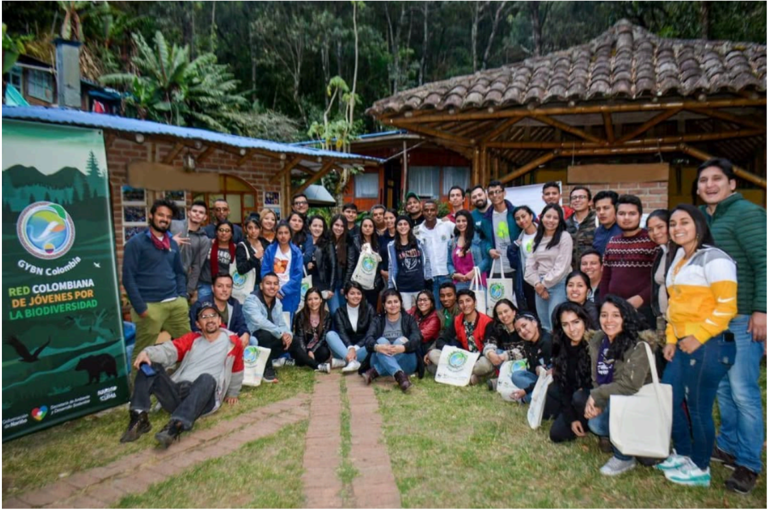
GYBN Colombia, in the lead up to CBD COP16 organised several capacity building sessions in Spanish to mobilise local youth with many themes overlapping with several principles of the Satoyama Initiative. GYBN Colombia engaged over 80 youth, with 500 youth engaged in the Pre-COP Youth Summit. These include:
- Facilitating intersectoral and intergenerational dialogues through national and regional events that opened up multi-stakeholder spaces challenging exclusionary policy structures.
- The project advocated for the integration of traditional knowledge and local perspectives into national biodiversity strategies, especially youth-led knowledge though online sessions, side events, briefings, reports and national articles. These activities promoted local knowledge, youth empowerment, and community-driven action.
- Capacity building on the KMGBF, CBD COP16 and how young people’s grassroots insights on SELPs can be meaningfully integrated into NBSAP processes.
- Through this project there was a push to institutionalize youth participation and intersectional perspectives, representing an effort to evolve governance frameworks toward inclusivity.
- Infographics and social media were used to enhance visibility and ensure wider reach and engagement, particularly among youth audiences.
GYBN’s national chapters faced different challenges while implementing their projects. Some of the challenges and lessons learnt from the review of activities:
1. While youth participation in SEPLS was strengthened by supportive networks, institutional access, and capacity development especially in under-resourced settings, rural areas with limited infrastructure faced delays and lower turnout.
2. While the ‘Training of Trainers’ model enabled decentralized leadership and ownership. Continued participation is uncertain due to lack of formal integration mechanisms.
3. Context specific adaptation was key for GYBN Niger due to unstable national conditions, border closures, and NGO suspensions that made project delivery unpredictable. But adaptations such as switching platforms and working offline enabled continuity.
4. Delayed responses from CBD focal points and lack of formal channels for youth hindered progress; however, formal invitations (e.g., AYSB hosting) boosted legitimacy.
5. Continuous engagement is necessary for successful and meaningful inclusion of young people in decision making spaces at all levels, particularly for SELPs where livelihoods and sustainable use of biodiversity overlap.
6. A strong need for integration of diverse knowledge systems in formal education, highlighting the significance of traditional/local knowledge in conserving biodiversity and in its sustainable use.
7. While young people successfully built partnerships, with some able to secure more funding to support their efforts, these opportunities often depended on access to small, restricted grants. Expanding access to more flexible and youth-friendly funding mechanisms would enable greater youth-led action for SEPLS, which are too often overlooked in mainstream conservation efforts.
8. Connectivity and transportation to rural areas proved to be particularly difficult in certain countries in Asia, Africa and LAC impacting the potential reach and engagement with rural youth who are directly engaged with SELPs.
f. Key messages
1. Continuous and sustained engagement of young people is important for meaningful inclusion at all levels of decision-making spaces.
2. Given the limited opportunities available, targeted capacity building and the provision of flexible, accessible funding mechanisms are crucial to support youth-led, on-ground actions for the conservation and sustainable use of SELPs.
3. Youth contributions to SELPs should be systematically monitored and actively supported, as they play a critical role in ensuring long-term sustainability, intergenerational equity, and the integration of traditional and innovative practices.
4. Partnerships and collaborations with a number of stakeholders including with environmental departments and community networks is crucial for long-term sustainable projects.
5. Youth are essential stewards of biodiversity and early engagement through education and action builds lasting connections and capacities.
6. For effective continued youth engagement it is critical that formal integration mechanisms are put in place for youth which also ensures that the Satoyamam principle of inclusive governance and equitable co-management of SEPLs.
References and bibliography
Agarwal, A. (2001). Community participation in forest management in India. FAO.
Aguilar Delgado, N. and Perez-Aleman, P., 2021. Inclusion in global environmental governance: Sustained access, engagement and influence in decisive spaces. Sustainability, 13(18), p.10052.
Barrett, C. B., Benton, T. G., Cooper, K. A., Fanzo, J., Gandhi, R., Herrero, M., … & Nelson, R. J. (2020). Socio-technical innovation bundles for agri-food systems transformation. Nature Food, 1(4), 200–210.
Bebbington, A. J., Humphreys Bebbington, D., Sauls, L. A., Rogan, J., Agrawal, S., Gamboa, C., Imhof, A., Johnson, K., Rosa, H., Royo, A. and Toumbourou, T. (2018). Resource extraction and infrastructure threaten forest cover and community rights. Proceedings of the National Academy of Sciences, 115(52), 13164-13173.
Berkes, F., Colding, J., & Folke, C. (2000). Redisco very of traditional ecological knowledge as adaptive management. Ecological Applications, 10(5), 1251–1262.
Borras, S. M., Hall, R., Scoones, I., White, B., & Wolford, W. (2011). Towards a better understanding of global land grabbing: an editorial introduction. Journal of Peasant Studies, 38(2), 209–216.
Cocks, M. (2006). Biocultural diversity: moving beyond the realm of ‘indigenous’ and ‘local’ people. Human Ecology, 34(2), 185–200.
Crona, B. I., Daw, T. M., Swartz, W., Norström, A. V., Nyström, M., Thyresson, M., … & Troell, M. (2016). Masked, diluted and drowned out: how global seafood trade weakens signals from marine ecosystems. Fish and Fisheries, 17(4), 1175–1182.
de la Torre, L., et al. (2020). The role of Amazonian Indigenous territories in forest conservation. PNAS, 117(6), 3015–3025.
FAO. (2020). The State of World Fisheries and Aquaculture 2020. Food and Agriculture Organization of the United Nations.
Fairhead, J., Leach, M., & Scoones, I. (2012). Green grabbing: a new appropriation of nature? Journal of Peasant Studies, 39(2), 237–261.
Gadgil, M., Berkes, F., & Folke, C. (1993). Indigenous knowledge for biodiversity conservation. Ambio, 22(2/3), 151–156.
Govan, H., Tawake, A., & Tabunakawai, K. (2009). Community-based marine resource management in the South Pacific. SPC Traditional Marine Resource Management and Knowledge Information Bulletin, 25, 16–25.
ILO. (2022). Global Employment Trends for Youth 2022. International Labour Organization.
IPBES. (2019). Global assessment report on biodiversity and ecosystem services. Intergovernmental Science-Policy Platform on Biodiversity and Ecosystem Services.
IPCC. (2022). Sixth Assessment Report. Intergovernmental Panel on Climate Change.
Mittermeier, R. A., Turner, W. R., Larsen, F. W., Brooks, T. M., & Gascon, C. (2011). Global biodiversity conservation: the critical role of hotspots. In Zachos, F. & Habel, J. (Eds.) Biodiversity Hotspots. Springer, Berlin, Heidelberg.
Myers, N., Mittermeier, R. A., Mittermeier, C. G., da Fonseca, G. A. B., & Kent, J. (2000). Biodiversity hotspots for conservation priorities. Nature, 403(6772), 853–858.
Ostrom, E. (1990). Governing the commons: The evolution of institutions for collective action. Cambridge University Press.
Ribot, J. C. (2004). Waiting for Democracy: The Politics of Choice in Natural Resource Decentralization. World Resources Institute.
Shackleton, S., Shackleton, C., & Shanley, P. (2007). Non-timber forest products in the global context. Springer.
Sithole, S.S., Walters, G.M., Mbatha, P. and Matose, F., 2024. Youth engagement in global conservation governance. Conservation Biology, 38(6), p.e14387.
UNCCD. (2022). Global Land Outlook 2. United Nations Convention to Combat Desertification.
UN-Habitat. (2020). World Cities Report 2020: The Value of Sustainable Urbanization. United Nations Human Settlements Programme.
World Bank. (2023). Poverty and Shared Prosperity Report 2022. Washington, DC: World Bank.